
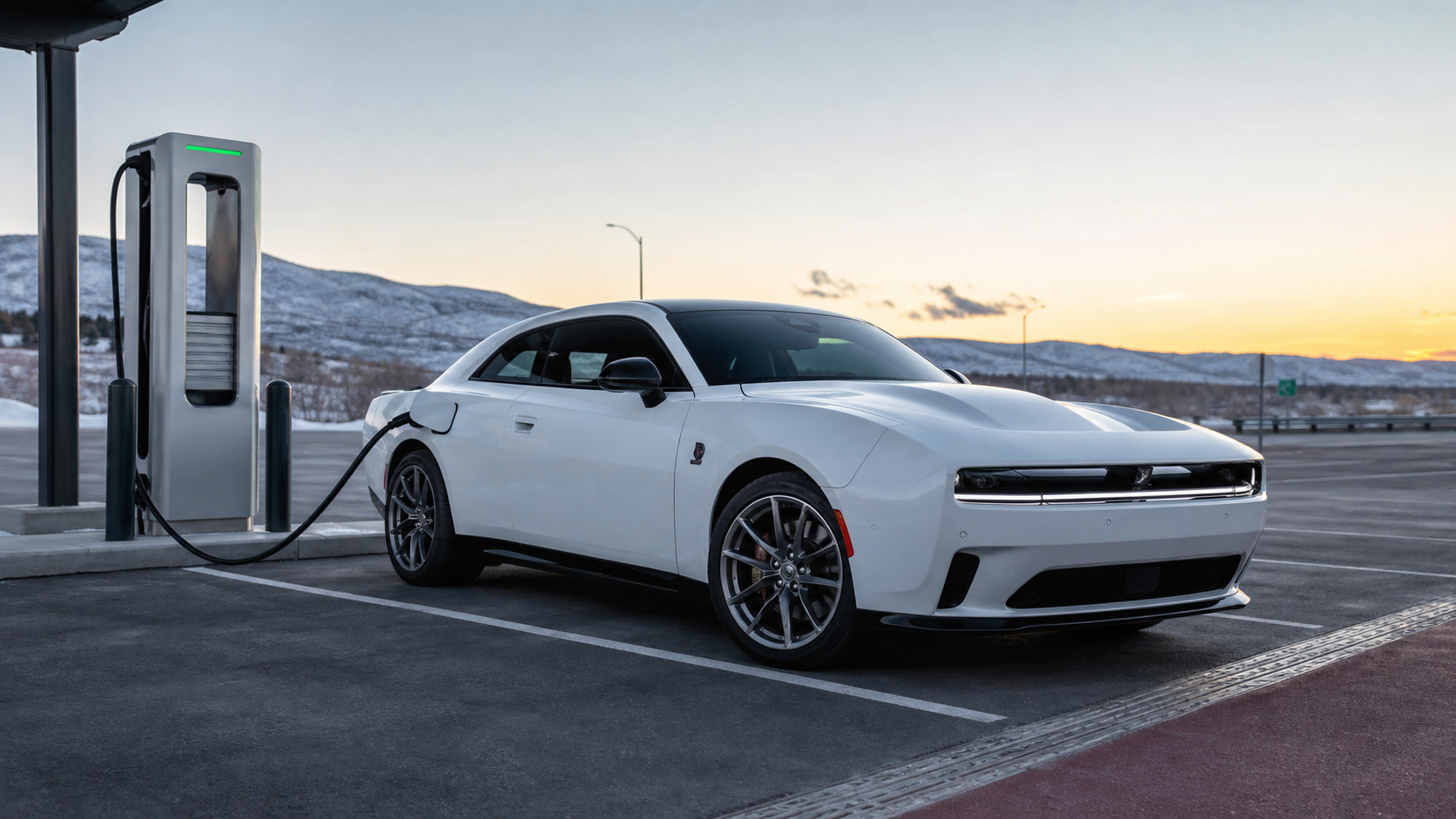
“Dodge Charger EV” typically refers to the all-electric Dodge Charger Daytona, built on an 800-volt architecture with DC fast charging as a key feature.
In simple terms, it’s the new battery-powered Charger and everything that changes in daily use: charging, range, and driving feel.
People searching Electric Dodge Charger or Dodge Charger Electric are usually looking for three concrete answers: whether it’s orderable yet, how practical charging is, and whether it still feels like a “muscle car” without gas.
- Before looking at numbers and trims, it helps to clarify the name: “Charger EV” isn’t a single car in every discussion.
- For real-world experience, charging and the charging network matter more than peak claimed power.
- Buying can be different: ordering, dealer availability, and final price can depend on allocations and what’s in writing.
Electric Charger: the direct answer on “Dodge Charger EV”
The search “Dodge Charger EV” points to the all-electric Dodge Charger Daytona—i.e., the new generation of Charger with electric drive and a high-voltage battery. It’s a break from gas Chargers: it’s not just the powertrain that changes, but how you “refuel” and plan trips. In practice, value isn’t measured only in horsepower; it’s measured in usable miles between charges, time at a charger, and the convenience of home charging.
A mental filter helps, too. A lot of online content mixes “EV” with possible future hybrid or gas variants. Here, the reference stays the battery-electric model. Final trim details can vary by market and delivery date, but the technical setup (EV, 800 V) is the frame that explains almost everything else.
Why there’s confusion around the name “Dodge Charger EV”
“Charger” is a historic name—and it carries weight.
In practice, the confusion comes from three overlaps: Dodge uses “Charger” as a family name; media use “Charger EV” as shorthand; and many readers search “Dodge Charger EV” without knowing whether they mean the electric Charger Daytona or another announced, rumored, or simply wished-for variant.
It helps to separate the layers:
- Family name: “Charger” as a line, not a single trim.
- Model name: “Daytona” as the identifier for the electric version in most conversations.
- Powertrain type: EV means a battery you charge externally, not “electrified” in a generic sense.
This matters when comparing spec sheets, too. One article may cite a Charger and talk about fuel economy, sound, and exhaust. Another may talk about batteries, kilowatts, and charging times. Same name, different reality.
A simple rule helps: if the content talks about 800 volts, DC fast charging, and power in kilowatts, it’s in the Dodge Charger Electric lane. If it talks about displacement, transmission, and a fuel tank, it’s something else.
The specs that change real life: range and charging
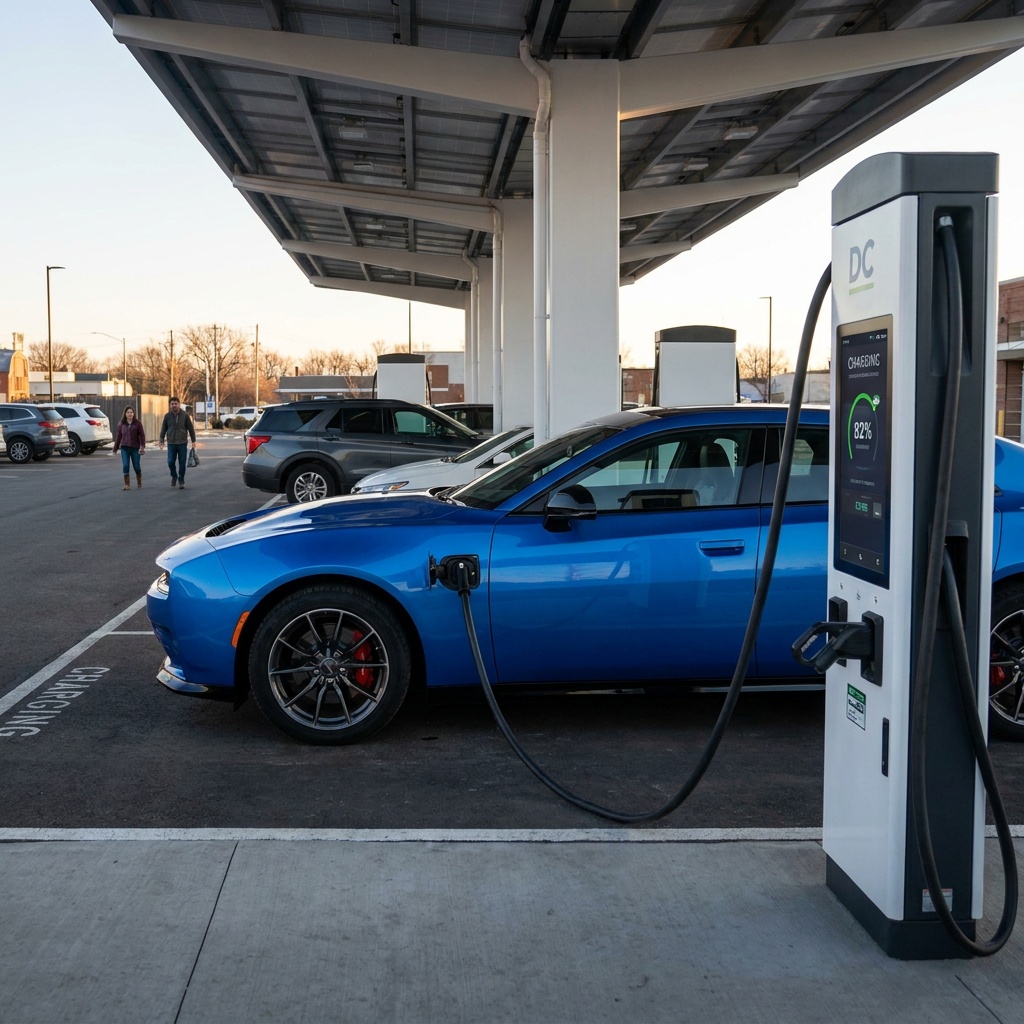
To really understand a Dodge Charger EV, the useful question isn’t “how many horsepower?” It’s “how do you charge it when you need to?”
Three levels matter: home AC charging (a typical wallbox) is what makes an EV easy; public AC charging is a patch when you can’t charge at home; DC fast charging is for trips and packed days.
The 800-volt architecture signals a goal: faster, more stable charging under the right conditions. But peak numbers alone can mislead. A charging curve can drop early, and then the “maximum” only lasts briefly. For real drivers, what matters is the time to go from one useful level to another—often 20% to 80%.
You also need realistic expectations about range. The official figure (when available for your market) comes from certification cycles. Then real life kicks in: highway speed, outside temperature, rain, wind, and driving style. In winter, many EVs use more energy for cabin heat and battery thermal management. In summer, A/C matters less, but it’s not free.
One often-overlooked detail is usable power at home. AC charging on a household circuit can be slow if you stick to standard outlets. A dedicated wallbox changes the picture, but it requires checking the electrical system, service capacity, and protections. To set expectations with a technical public source, the AFDC guide to home EV charging clearly explains AC vs. DC charging and what to expect from different levels.
If you drive very little, you can live with slower charging. If you rack up miles, you can’t. That’s the difference.
Performance and “feel”: what changes when you switch to a Charger EV
An EV can feel brutal off the line. That’s normal.
Electric torque arrives immediately, so pedal response feels different from a traditional V8. You don’t need to “rev it out” to feel thrust. That makes the car very easy in traffic and for short passes. But it shifts attention to chassis, tires, and power management. If the electronics pull power for traction or temperature, the sensation changes.
Weight is the other side of the coin. Batteries add mass and often lower the center of gravity. Result: more stability in corners, but also more inertia under braking and in quick direction changes. For a modern muscle car, that can be an acceptable trade-off—but it’s worth understanding before worshipping the numbers.
The emotional topic is sound. Many people search “Dodge Charger EV” with an identity-level doubt: without the noise, is it still a Charger? There’s no universal answer. It depends on what you want from a muscle car. If the goal is instant acceleration and daily use without gas, electric makes sense. If the goal is mechanical ritual, vibrations, and a soundtrack, an EV won’t replicate that experience—it can only offer a different one.
Consistency matters, too. In some EVs, repeated hard launches trigger thermal protections that reduce power to protect the battery and inverter. That’s not a “defect”; it’s management. But anyone who tracks the car or drives aggressively will want to know how long performance stays strong before a noticeable drop.
One last point—less romantic but decisive—is regenerative braking. It changes how you slow down. Some drivers love it in the city; others find it unnatural until they adapt. And adaptation takes days, not months.
Charging in real life: what changes between home, work, and trips
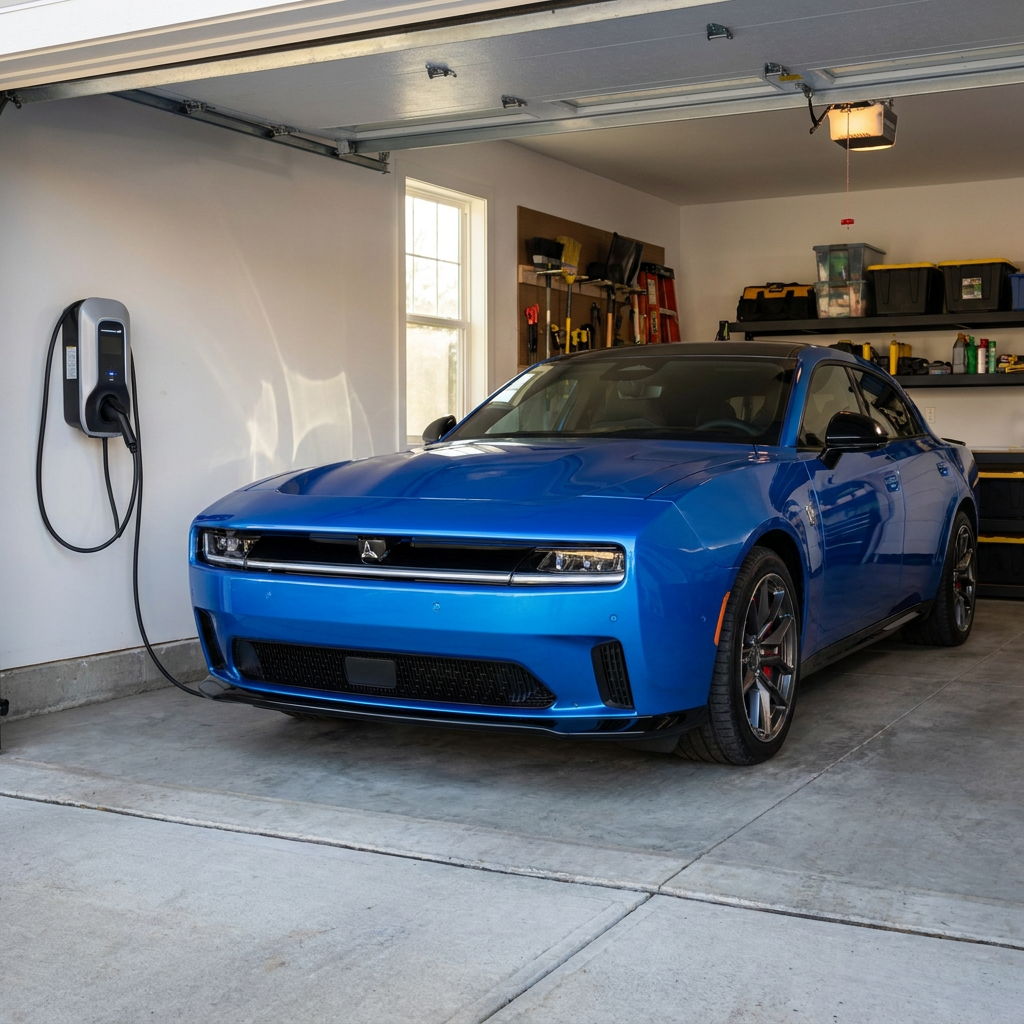
In day-to-day use, a Dodge Charger EV only feels simple if “baseline” charging happens while the car is parked. Home and work matter more than highway chargers.
As a useful rule of thumb, AC charging on a wallbox typically runs around 7–11 kW. Over an 8–10 hour night, that pace often covers average daily driving without much thought. With a standard household outlet, recovery is slow and the car can reach the weekend still “behind.”
If you live in an apartment/condo, you’re in a different category. It’s not enough to have a parking spot—you need to know whether there’s electrical provision, whether installation is allowed, and how energy use is metered. The issue isn’t only technical; it’s organizational.
On trips, the metric changes. The abstract range number matters less than how long it takes to get from a “safe” level back to a level that lets you continue without anxiety. On many routes, the practical window is still 20% to 80% because the last few percent tends to slow down. That dynamic applies even on modern architectures.
A commonly ignored detail is available service capacity. A 3 kW home service may only support a wallbox with smart load management or a service upgrade. In a home with induction cooking, an electric water heater, and HVAC, “blind” charging creates breaker trips and frustration.
Three profiles show up clearly:
- Occasional, urban use: slower charging can work, but it requires discipline and planning.
- Regular use with fixed routes: a wallbox makes EV ownership almost “invisible.”
- Heavy use and frequent trips: the quality of DC fast charging along your usual routes matters more than anything else.
Perceived range: why 120 km can “weigh” more than 300
Range in an electric Charger isn’t experienced as one number. It’s experienced as a series of buffers.
In the city, efficiency tends to be favorable because speeds are low and regen recovers energy during deceleration. On the highway, aerodynamic drag rises quickly and consumption climbs. That’s why 120 km of fast highway driving can “cost” more than a full day of urban errands.
Temperature adds a second layer. In winter, energy also goes to battery and cabin thermal management. On short trips, the penalty feels bigger because the car never reaches a stable condition. On longer drives, the system reaches equilibrium and the impact spreads out.
How you use the battery matters, too. Keeping the car at 100% all the time for convenience isn’t always the most sensible choice. Many EV owners prefer a lower daily limit and save 100% for trips, when it actually matters. It’s a habit, not a universal rule.
The most useful way to read range—if you’re coming from the query “Dodge Charger EV”—is this: how much range is left when the day doesn’t go smoothly. Rain, traffic, detours, cold, an unexpected stop. That’s where the car gets judged.
To avoid bad expectations, think in “buffers”:
- Departure buffer: enough energy for the plan plus margin.
- Arrival buffer: a minimum percentage so you’re not dependent on a single charger.
- Return buffer: the ability to get home without forced charging, especially at night.
Buying and the contract: how to avoid surprises with orders, allocations, and final price

The buying process for an all-electric Dodge Charger Daytona doesn’t always look like purchasing a “stock” model. It can be closer to a batch process: allocations arrive, order windows open, and timing and equipment can shift by market.
Paperwork is what makes the difference. A generic quote or a verbal promise won’t protect you from changes. You want a document that clearly states configuration, agreed price, any packages, estimated timing, and cancellation terms. The small lines matter too: delivery fees, mandatory services, forced accessories.
Markups can happen, and outrage doesn’t solve them. Clarity before leaving a deposit does. A dealer may add premiums during high demand or limited availability—the point is knowing it upfront.
For anyone entering the EV world with a new model, the buy vs. lease choice isn’t only financial—it’s also risk management. Leasing can reduce exposure to depreciation and rapid tech change, but it locks you into mileage limits and return conditions. Buying gives freedom, but puts early-market uncertainty on the owner.
Three practical checks are often overlooked:
- Out-the-door price: it should include every line item, not just MSRP.
- Timing and penalties: what happens if delivery slips by months.
- Written specs: charging, equipment, and software should appear in the contract or attachments.
Real-world trade-offs: where an electric muscle car shines and where it asks for compromises
A Dodge Charger EV is often judged by two different yardsticks: “muscle” identity on one side, and modern EV practicality on the other.
In daily traffic, electric power tends to flatter a powerful car: instant response, quick passes without downshifts, easy drivability. The downside shows up when your schedule is unpredictable and charging isn’t under control. Without a reliable charging plan, even a highly desired EV becomes a logistics exercise.
For trips, the network is the difference-maker—not just whether chargers exist, but reliability, real-world power, and availability. A “perfect” stop is short; a stop with a broken or occupied charger changes your perception more than any horsepower figure.
To clarify contexts without turning it into cheerleading, a quick framework helps. It applies to people searching Dodge Charger EV and to anyone mentally comparing an electric Charger with other high-performance EVs.
| Situation | Electric Charger | Why it can work (or not) |
|---|---|---|
| Home wallbox + regular routes | Very suitable | “Invisible” charging and instant performance day to day |
| Apartment/condo without dedicated charging | More demanding | Dependence on public charging and variable time/cost |
| Frequent trips on routes with reliable fast charging | Good | Stops are manageable if chargers are truly available |
| Heavy use with unpredictable mileage | Context-dependent | You need range margin and a repeatable charging strategy |
Drivers coming from a gas Charger often look for emotional equivalents. They don’t always show up. Still, for many people, the new experience can be convincing for everyday reasons: less mental friction, more immediate response, fewer mandatory “rituals.”
One last practical note: before signing, it’s worth verifying where you’ll actually charge in the first 4–6 weeks. That’s when you learn whether the EV is convenient—or just desirable.
Daily use and expectations: where you really win (and where you don’t)
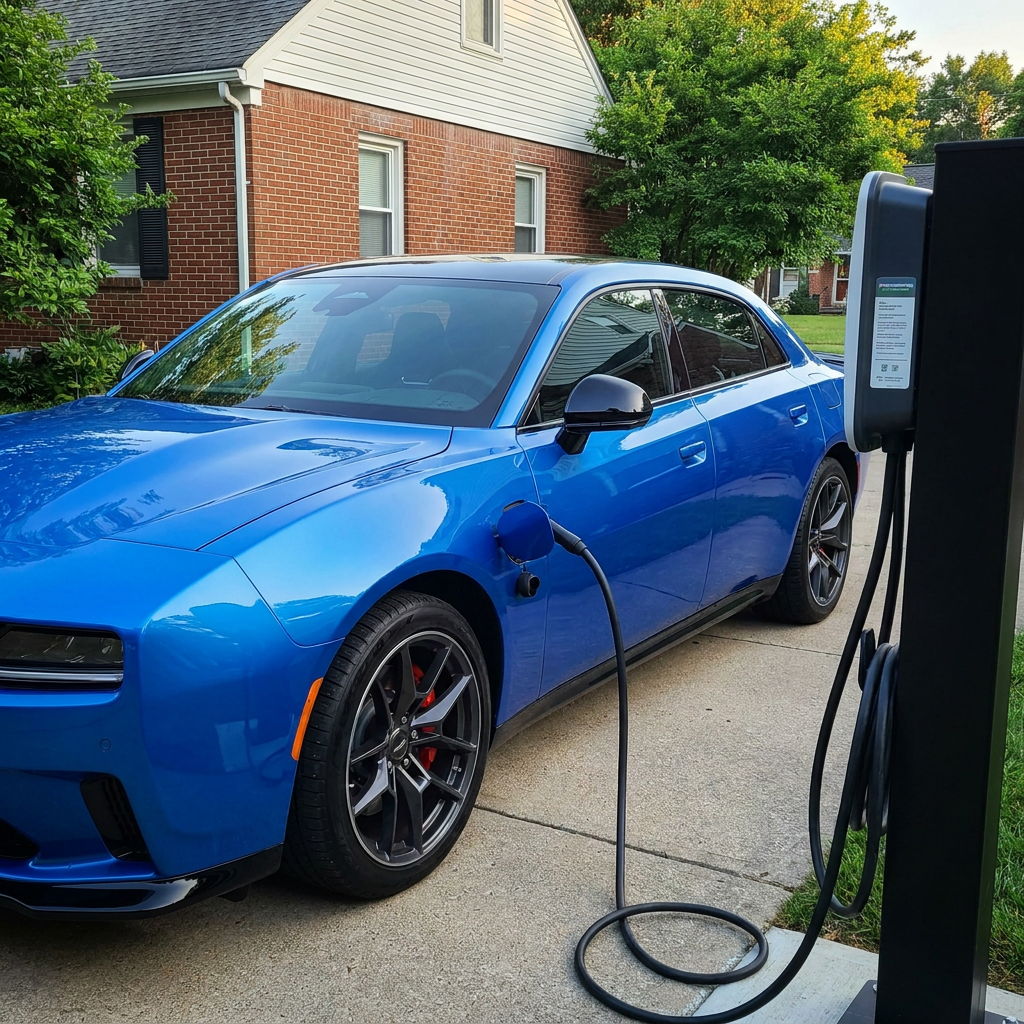
With an electric muscle car, satisfaction doesn’t come only from performance. It comes from repeatability. If the car starts each morning with enough energy and without “charging thoughts,” the switch feels natural. If every week requires juggling apps, detours, and timing, even a dream car becomes tiring to own.
The most underestimated factor is how flexible your day needs to be. A smooth day works with almost any EV. A day full of surprises tests your setup. Three practical things matter: always having a Plan B charger near home or work, avoiding dropping below your comfort threshold too often (many drivers feel calm above 20–30%), and knowing two or three reliable fast-charge stops along your usual routes.
You also need mature expectations about “feel.” Instant torque can win you over immediately, but some drivers stay attached to the mechanical ritual. That’s not a personal flaw—it’s a buying criterion.
A clear editorial stance closes the loop: the search “Dodge Charger EV” only makes sense as a purchase when charging is already solved. Everything else—including performance—comes after.
Who the Dodge Charger EV makes sense for (and who it doesn’t)
It makes sense for people who can charge regularly (home or work), drive fairly predictable miles, and want a modern muscle car with instant response in traffic and for passing. This profile tends to value “clean” driving and simple ownership more than gas-engine ritual.
It’s a poor fit for anyone without a reliable charging option, anyone whose life is built around sudden long drives, or anyone who mainly wants noise, vibration, and “mechanical” character as the core of the experience. In those cases, the EV can feel more like logistics than pleasure.
Practical steps before you sign: the right questions and verifiable answers

When a model is in high demand or arrives in batches, the common mistake is confusing excitement with certainty. A “nice” quote isn’t enough. You need written confirmations that will still make sense six months from now.
These questions tend to separate a clean deal from one full of surprises:
- What exactly is the configuration on the document? Options, packages, wheels, software, and equipment should be listed—not implied.
- Which line items make up the final price? The total should include delivery, paperwork, and any mandatory services.
- What happens if delivery slips? You need a clear rule on deposit, cancellation, and timing—not a verbal promise.
- What conditions affect warranty and maintenance? With EVs, software matters too, not just traditional hardware.
One concrete check—often decisive—is public charging. Before committing, verify two realistic fast-charging locations in person: one near home and one on a typical route. You don’t need a long trip; 15 minutes of observation is enough to see whether the station is truly “usable” or merely “present.”
If you’re weighing leasing vs. buying, the most rational choice isn’t ideological. It depends on how much early-market risk you want to carry: evolving tech, used values settling, software updates changing the experience. Leasing reduces exposure on those points, but demands discipline on mileage and return condition.
Common questions
Is “Dodge Charger EV” a search for a pure EV or a hybrid?
In most cases it means the all-electric Charger Daytona. Confusion happens because “Charger” is used as a family name and online chatter often mixes different variants.
How much does the 800-volt architecture matter in real life?
It matters when you DC fast charge on capable stations. Day to day, your AC charging routine and how consistently you return to a comfortable state of charge matter more.
What makes a powerful EV frustrating even if you like it?
Frustration shows up when charging isn’t under control and every week requires juggling. Without a reliable option, range becomes a mental constraint more than a technical spec.
Does it make sense to search “Electric Dodge Charger” if you can’t charge at home?
Only if you have stable alternatives—like workplace charging or a nearby, reliable station you can use consistently. If charging stays random, the experience tends to degrade quickly.
When to choose it, and when to walk away
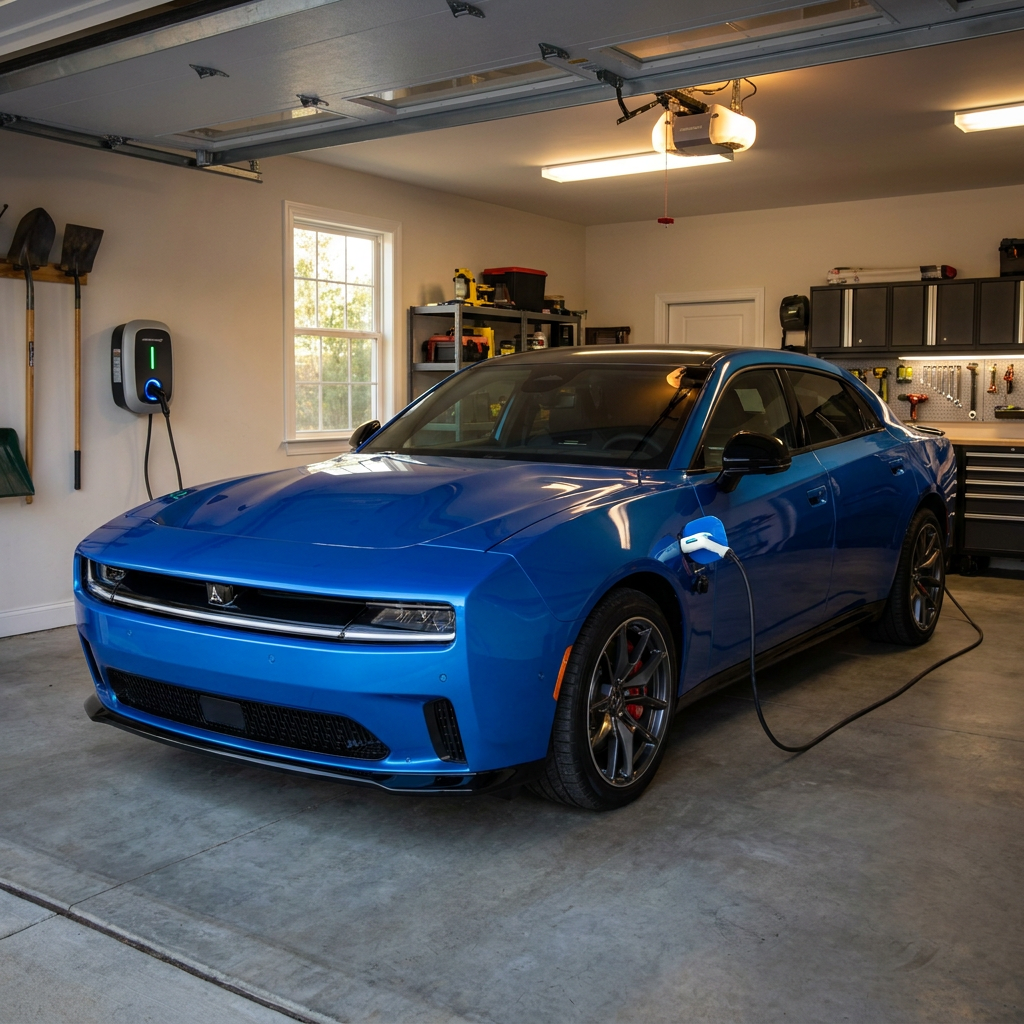
It makes sense to step into the Dodge Charger EV world when charging is already part of your routine, your routes are fairly predictable, and the idea of an electric muscle car appeals more for daily use than for gas nostalgia.
It’s better to pause—or wait—when your only charging option is “whenever it happens,” when frequent trips depend on a few uncertain stations, or when the car’s identity is almost entirely about noise and mechanical ritual.