
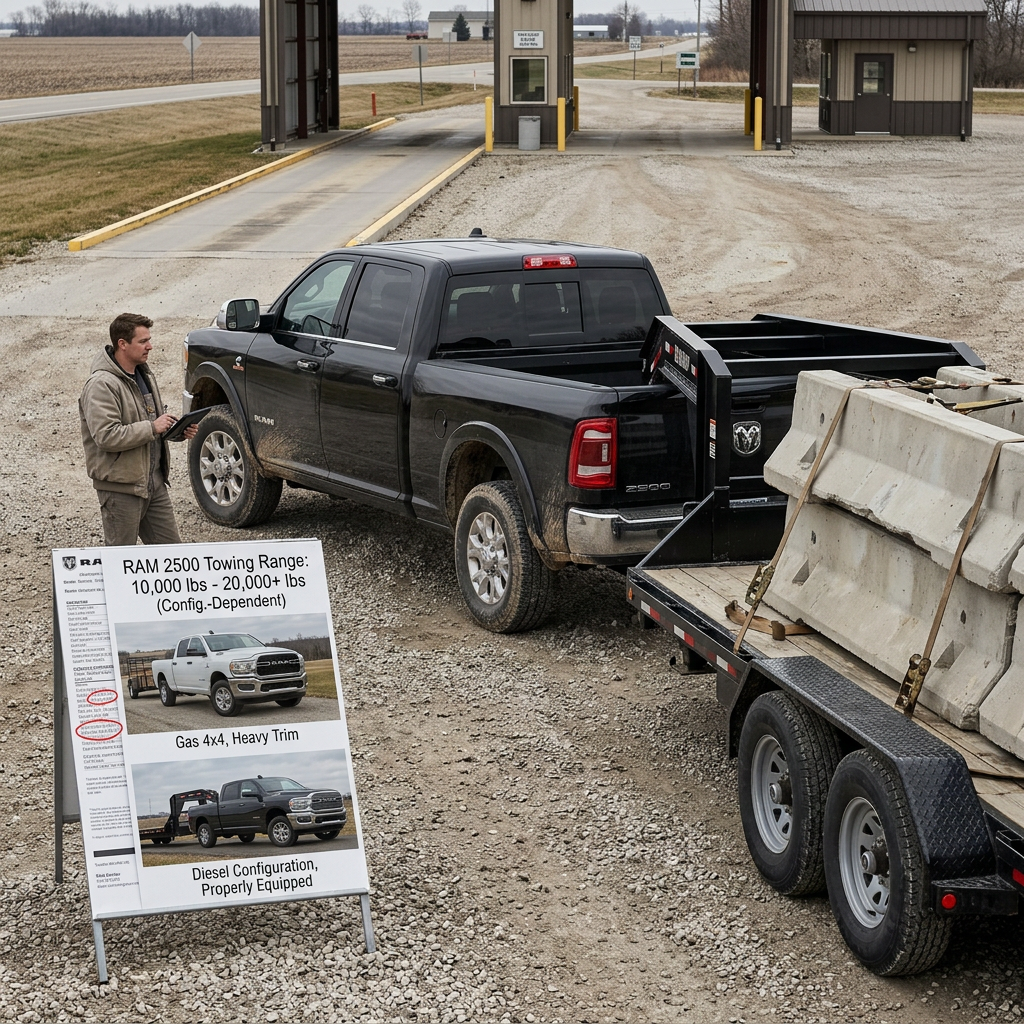
RAM 2500 towing capacity varies by engine, axle ratio, cab/bed, 4×4, and hitch type—and payload is often the first hard limit.
In simple terms, the “can it tow?” answer depends on the exact truck and how the trailer’s weight sits on it.
| Scenario | Option | Why it fits |
|---|---|---|
| Primary pick | CURT 60618 | Main product for the search intent and the most direct reference. |
| Alternative 1 | CURT 13333 | Alternative when texture, feel or function needs to differ. |
| Alternative 2 | B&W GNXA2062 | Comparison option for tuning routine, finish and tolerance. |
Most people searching tow ratings for a RAM 2500 are trying to avoid two surprises: a “max tow” figure that doesn’t match their configuration, and a payload sticker that runs out long before the trailer does.
- Start with the door-jamb payload and GVWR. That number controls tongue or pin weight.
- Match the hitch type to the trailer. Bumper-pull and gooseneck behave very differently.
- Use the truck’s exact ratings, not a headline max. One trim change can move the limit by thousands.
RAM 2500 towing capacity in plain numbers: what it really means
Published RAM 2500 towing capacity figures are best read as a range, not a promise. A RAM 2500 can be rated from the low five-figures for some gas, 4×4, heavy-trim setups to the high teens or around 20,000 lb in certain diesel configurations when equipped correctly. That spread isn’t marketing fluff. It’s the difference between two real trucks that both say “2500” on the fender.
Two limits matter every time. One is the truck’s maximum trailer weight rating (often derived from GCWR, the combined rating for truck and trailer). The other is payload, because payload is where tongue weight or pin weight lands. Payload gets consumed fast.
As a quick anchor, conventional bumper-pull trailers commonly place about 10% to 15% of their loaded weight on the hitch as tongue weight. Fifth-wheel and gooseneck setups often land around 15% to 25% on the truck as pin or ball load. A 12,000 lb travel trailer at 12% tongue weight is about 1,440 lb before passengers, tools, and a weight-distribution hitch head. A 14,000 lb fifth-wheel at 20% pin weight is about 2,800 lb, instantly forcing a payload-focused reality check.
That’s why “Dodge Ram 2500 towing capacity” searches often end with a scale ticket. Ratings are a starting point. Weight is the truth.
Why the tow rating for a RAM 2500 varies so much by configuration
Truck ratings move because the truck itself changes. Some changes are obvious, like gas versus diesel. Others are small on paper but big on the sticker, like heavy options that add curb weight and quietly reduce payload.
Engine and transmission are the headline drivers because they influence GCWR and cooling capability. A diesel RAM 2500 typically carries higher tow ratings than the gas version, but it can also carry less payload in some trims because the powertrain is heavier. That trade can matter more than the tow rating if the trailer has high pin weight.
Axle ratio matters too. A lower (numerically higher) ratio like 4.10 generally helps the truck accelerate and hold gears under load. It can improve rated towing in many guides. But it’s not a free upgrade. It affects fuel use and cruising rpm, and it doesn’t solve payload.
Cab, bed length, and drivetrain count as well. Crew cab and 4×4 add weight. More weight in the truck means less remaining capacity for people and hitch load. A longer wheelbase can feel more stable with certain trailers, but stability isn’t the same as a higher rating.
Trim level is the sneaky one. Big wheels, off-road packages, luxury interiors, and heavy bumpers can all raise curb weight. The tow rating might still look strong in a brochure, yet the payload sticker can be the limiting factor in real use. That sticker is specific to the truck as built.
Hitch equipment changes the usable rating. A receiver’s label can cap tongue weight, and a weight-distribution hitch can raise the receiver’s allowed tongue weight in “WD” mode on some setups. Gooseneck and fifth-wheel towing move load into the bed, changing how the truck carries weight and how quickly payload is consumed.
The limits that actually cap RAM 2500 towing capacity: GVWR, GCWR, payload, and hitch load
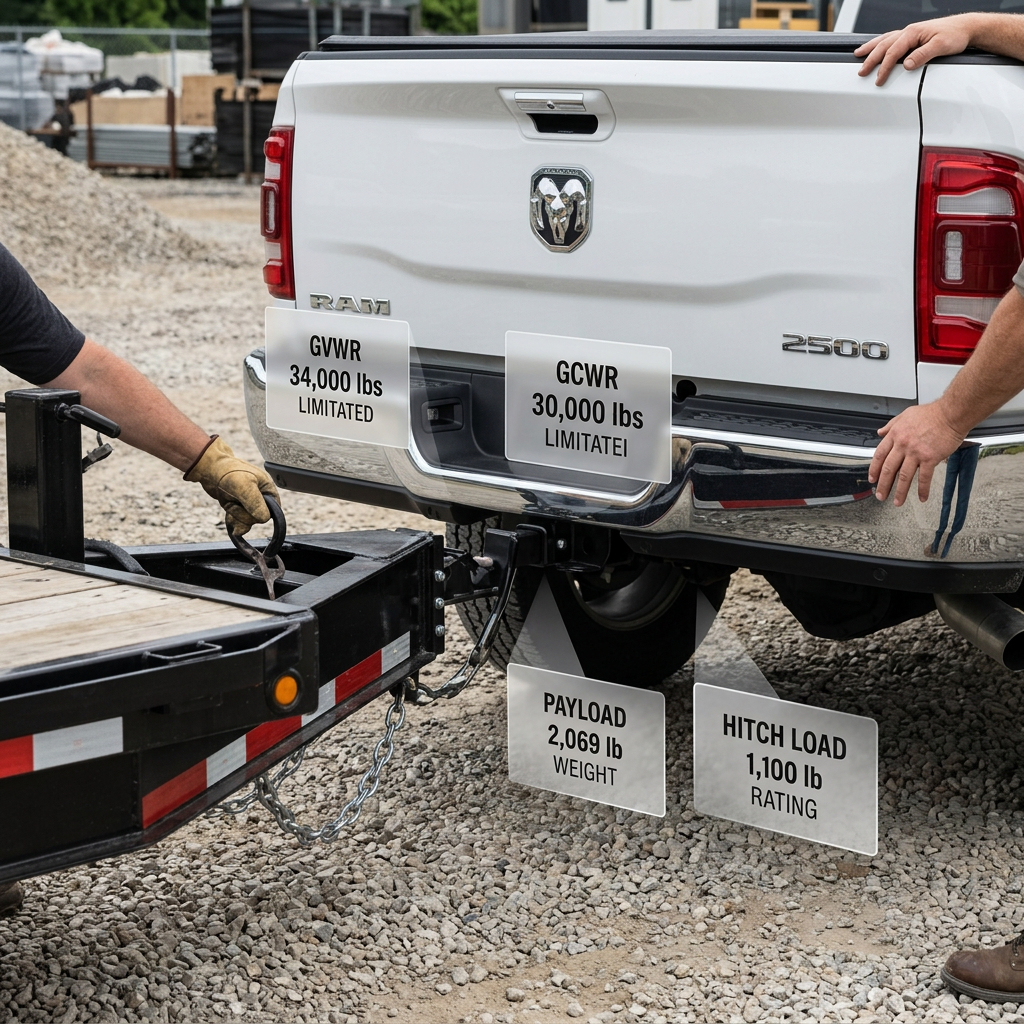
Four numbers decide the outcome, even if only one gets quoted online.
- GVWR: the maximum the truck itself can weigh when loaded. Exceed it and the truck is overloaded even with a “legal” trailer weight.
- Payload: how much weight can be added to the empty truck. It includes passengers, cargo, hitch hardware, and tongue or pin weight.
- GCWR: the maximum combined weight of truck plus trailer. It’s the backbone of most “max trailer weight” ratings.
- Max tongue or pin weight: sometimes limited by the receiver, the hitch, or the truck’s rating for that hitch type.
Payload is the common choke point for conventional towing. Tongue weight counts as cargo in the truck. So do a full fuel tank, a bed toolbox, a generator, a family of five, and the hitch itself. A weight-distribution hitch can improve how the truck carries the load by transferring some weight forward, but it does not erase payload. The weight still exists, and it still sits on the truck’s axles.
Fifth-wheel and gooseneck towing often hit payload even faster. Pin weight is higher than tongue weight for the same trailer weight. It sits closer to the rear axle, which can help control and reduce sway tendencies compared with bumper-pull setups. But it also stacks load directly into the truck’s rear axle capacity and tire ratings.
Tires and wheels deserve more attention than they get. The tire sidewall max load, the rear axle rating (RAWR), and the truck’s actual rear axle weight when hitched can become the real boundary. A RAM 2500 can have plenty of engine and braking to pull a trailer while still being overloaded on the rear axle. That’s not a theoretical issue. It’s a scale issue.
For readers who want an official baseline for safe loading and weight measurement practices, the National Highway Traffic Safety Administration explains vehicle loading concepts and labels in its consumer guidance: NHTSA Tire And Loading Information.
A repeatable way to find the exact towing capacity for the RAM 2500 being driven or bought
Getting the real tow rating for a specific truck is a short workflow. It’s not guesswork, and it doesn’t require trusting a generic chart that may be for a different cab, axle ratio, or drivetrain.
- Read the door-jamb stickers: GVWR, GAWR (front and rear), and the payload figure on the tire and loading label.
- Check the hitch and receiver labels: maximum trailer weight and maximum tongue weight, plus any “with weight distribution” rating.
- Confirm the truck’s configuration: engine, axle ratio, cab, bed, 4×4 or 4×2, and any factory tow prep.
- Use the manufacturer towing guide for that model year to match configuration to GCWR and max trailer rating.
- Validate with real weights: weigh the truck alone, then weigh truck and trailer together, then check axle weights if possible.
Door-jamb payload is the fastest truth check. It already accounts for how that truck left the factory. It’s also the number that gets quietly reduced when heavy options are added.
Receiver labels prevent a common mismatch. A trailer might be “within tow rating” yet exceed the receiver’s tongue weight rating. That can happen with short travel trailers loaded rear-heavy, or with toy haulers that shift balance as cargo moves.
Weighing matters because trailer “dry weight” is rarely the towed weight. Water adds about 8.3 lb per gallon. Propane, batteries, a generator, and camping gear can add hundreds fast. A 30-gallon fresh tank is roughly 249 lb before the tank and plumbing are counted. Small numbers stack.
How hitch choice changes what the truck can use
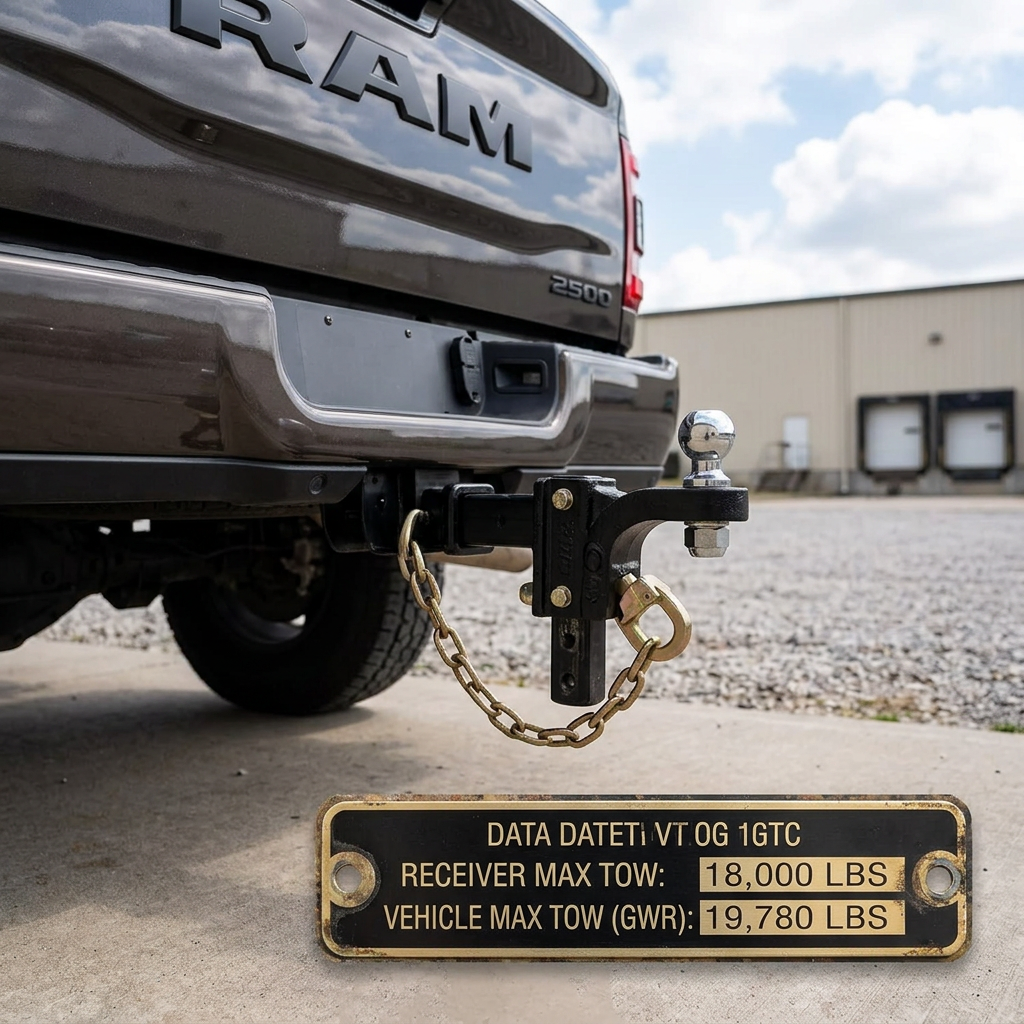
RAM 2500 towing capacity looks simple until hitch hardware enters the picture. The hitch doesn’t just connect the trailer. It changes how weight is carried, where it lands on the truck, and what label becomes the limiting factor.
For bumper-pull towing, the receiver’s tongue-weight rating is a hard cap. That cap can be lower than the truck’s advertised trailer rating, and it can be lower still if the receiver is a lighter class. A common mismatch happens when a travel trailer is “within pounds” on paper but pushes too much tongue weight once loaded with water, batteries, and gear stored forward.
A weight-distribution hitch shifts some load forward onto the front axle and back onto the trailer axles. It can reduce rear sag and restore steering feel. It does not remove payload, and it does not change the truck’s GVWR or axle ratings. It also adds its own mass to the payload equation. Hitch head, shank, bars, and hardware can easily add roughly 60 to 120 lb depending on design and rating.
Fifth-wheel and gooseneck setups move the load into the bed, usually ahead of the rear axle. Handling often feels more planted than a long bumper-pull because the pivot point moves forward. But pin or ball load is higher than tongue weight for the same trailer weight, and it consumes payload quickly. Hitch choice becomes a payload strategy, not a power strategy.
Hardware ratings matter, too. A gooseneck ball rated at 30,000 lb gross trailer weight and 7,500 lb vertical load can exceed what a particular RAM 2500 configuration can legally carry on its rear axle or tires. The truck’s limits still win. For readers building around a factory puck system, products like CURT 60618 exist because fit and retention method are as important as the number on the box.
Receiver fit can also be a trap on older trucks or when mixing model years. A 2-inch receiver is common, but not universal across trims and years. A Class 3 receiver, such as CURT 13333, may be perfectly appropriate for a lighter towing job while being the wrong tool for heavy conventional towing that needs higher tongue-weight capacity.
Payload-first math that prevents common “max tow” mistakes
Trailer weight is the headline, but payload math decides whether the setup is usable day to day. The clean way to do it is to start with the truck’s payload sticker, then subtract real people and real cargo, then reserve room for hitch load.
Use practical anchors, not optimistic assumptions. For a bumper-pull trailer, 12% tongue weight is a reasonable planning number when the trailer is loaded for travel. For a fifth-wheel or gooseneck, 20% pin or ball load is a safer planning number unless scale data proves otherwise. Those two percentages alone explain why two trailers with the same gross weight can feel like entirely different demands on a RAM 2500.
Two real-world examples show the squeeze:
- 12,500 lb travel trailer at 12% tongue weight: about 1,500 lb on the truck before passengers, bed cargo, and the weight-distribution hitch hardware.
- 14,000 lb fifth-wheel at 20% pin weight: about 2,800 lb in the bed, plus the fifth-wheel hitch itself, plus everything else carried in the truck.
That’s where “tow rating RAM 2500” searches go sideways. A truck can have the GCWR-based trailer rating to pull either example, yet run out of payload or rear axle capacity first. It’s also why the long-tail “Dodge Ram 2500 towing capacity” phrase often reflects shopping confusion. A buyer may be comparing two trucks that share the same model badge but have very different payload stickers because of drivetrain, trim, and wheel choices.
Rear axle reality is where the last check happens. A trailer can be under the trailer rating and still overload the rear axle once pin or tongue weight, hitch mass, passengers, and bed cargo stack up. The only reliable confirmation is axle weights on a scale. That step doesn’t need to be complicated, but skipping it keeps people stuck in brochure math.
Equipment and setup details that change stability more than the rating
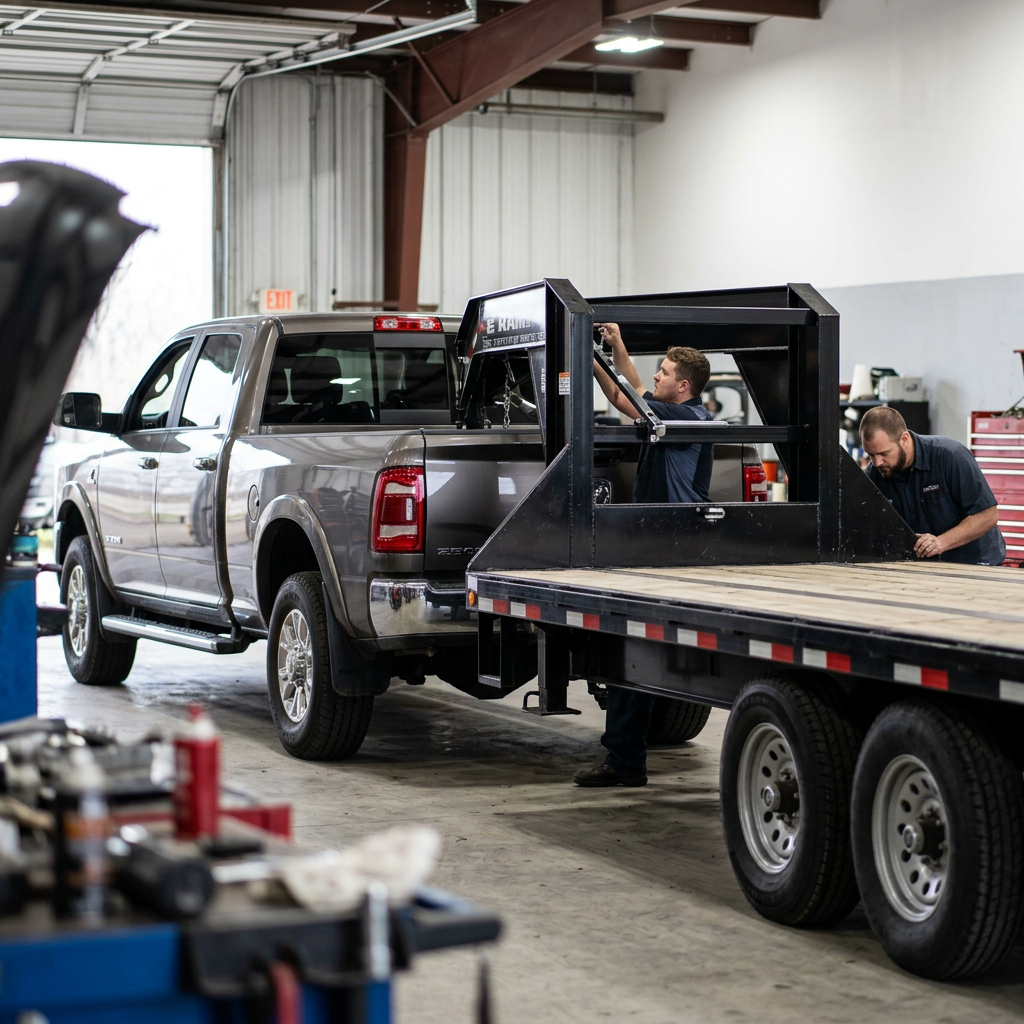
Stability problems rarely come from being 300 lb over a published trailer number. They come from balance, geometry, and compliance in the system. RAM 2500 towing capacity discussions often miss that because the spec sheet looks like the whole story.
Start with wheelbase and trailer length. A longer wheelbase Crew Cab long bed often feels calmer with longer bumper-pull trailers than a shorter wheelbase configuration, even when the rating is similar. That doesn’t raise the legal limit, but it changes the driver’s margin on crosswinds, passing trucks, and rough pavement. Tire sidewalls matter in the same way. Higher load range tires with stiffer sidewalls can reduce squirm under heavy tongue or pin loads, while lower load ratings or softer sidewalls can make the truck feel vague even when under the numbers.
Brake controller setup is another stability lever. Too little trailer brake gain makes the truck do the work, which heats truck brakes and increases stopping distance. Too much gain can create trailer brake lockup or a grabby feel that destabilizes the combination. A controlled stop on a quiet road, then a second check after the trailer is fully loaded, is a better practice than setting it once and forgetting it for a season.
Suspension aids deserve careful framing. Rear air bags, helper springs, or Timbrens can level the truck and reduce sag. They don’t increase payload, GVWR, or axle ratings. They can also mask overload by making an overloaded setup look level. Level isn’t the same as within rating.
Hitch height and trailer attitude change handling too. A travel trailer that tows nose-high often loses front-axle traction on the trailer, which reduces stability and can increase sway tendency. A fifth-wheel that rides too high in front can shift pin weight and create chucking. Small adjustments in hitch height can matter more than chasing an extra 500 lb of rated capacity.
When aftermarket hitch hardware helps, and when it creates new constraints
Aftermarket hitch parts can solve real fit and usability problems on a RAM 2500, but they can also introduce new failure points if they’re mismatched to the truck’s prep package or the trailer’s demands. The goal isn’t “stronger hardware.” The goal is a system where every component is rated appropriately and installed correctly.
Factory 5th-wheel prep (puck systems) changes the shopping filter. A gooseneck ball designed for that system installs cleanly and keeps the bed usable when the ball is removed. A kit like B&W GNXA2062 is typically considered in that context because it targets OEM-style fitment rather than universal rails. But fitment still needs verification by model year and bed configuration, especially across the 2013 to 2026 span where trucks can share a nameplate while changing details.
Safety chain attachment is another detail that gets skipped right until the day it matters. Some gooseneck setups require separate chain anchors that match the puck system. A part such as CURT 60617 exists for that reason. Chain geometry matters. Anchors should allow straight, clean pulls without sharp bends or interference under articulation.
Hardware can also create clearance constraints. Gooseneck balls and fifth-wheel hitches change bed rail clearance, tailgate clearance, and turning clearance. Short-bed trucks can require a sliding hitch for some fifth-wheel front cap designs. Ignoring that can lead to cab-to-trailer contact during tight turns, even when the truck is well within its tow rating.
Installation quality is part of capacity in practice. Correct torque, correct engagement of locking mechanisms, and periodic inspection matter more on higher loads. A quick recheck after the first 50 to 100 miles of towing catches settling and fastener movement that doesn’t show up in the driveway.
For a technical, non-commercial reference on braking performance, stopping distance, and safe towing practices, the Society of Automotive Engineers provides context on vehicle dynamics and braking standards used across the industry. A public overview of SAE’s mobility standards work is available here: SAE Standards And Technical Work.
How to set a comfort margin without leaving towing capacity on the table
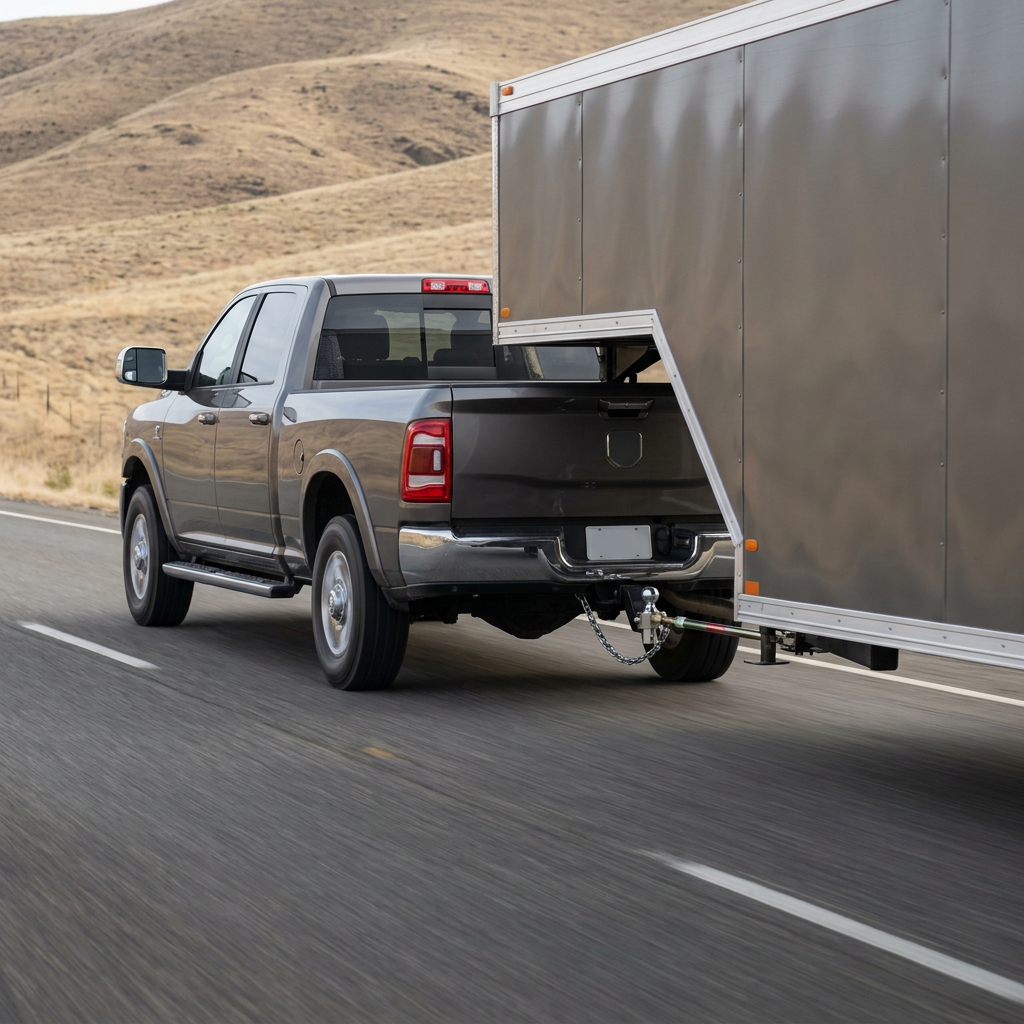
RAM 2500 towing capacity discussions often get stuck on the maximum number. In real towing, the more useful question is how much trailer can be handled with repeatable control on long grades, in crosswinds, and during emergency braking. That “comfort margin” isn’t a single percentage. It depends on trailer shape, load placement, speed, and how often the combination is used.
For occasional towing, a setup that stays clearly below payload and rear axle limits tends to feel calm even if it’s closer to the published trailer rating. For frequent towing, the opposite is true. Running close to limits all the time makes small mistakes expensive, like loading heavy gear forward of the trailer axles or letting tire pressure drift.
Three practical anchors help keep expectations realistic without turning everything into fear:
- Use the trailer’s loaded weight, not “dry” numbers. A difference of 800 to 1,500 lb is common once water, propane, batteries, and normal cargo are included.
- Plan for tongue or pin weight that matches the trailer type. If the trailer’s balance pushes higher than expected, payload disappears fast, even when the advertised tow rating still looks fine.
- Treat speed as a stability tool. Many sway events start with speed and steering inputs, not with being a few hundred pounds “over.”
A confident editorial position belongs here: a RAM 2500 that is within axle and tire limits but feels unstable is not “fine.” Stability is part of safety. If the handling isn’t settled after correct loading and hitch setup, the answer is to reduce trailer demand or change the trailer type, not to keep chasing a bigger headline tow rating.
When it works and when it doesn’t
This fits drivers who want heavy-duty towing without moving all the way to a dually, and who are willing to verify numbers on the door sticker and a scale ticket. It also fits mixed use, like towing a few times a month and daily driving the truck the rest of the time. In that pattern, the RAM 2500 towing capacity range makes sense as long as payload and rear axle capacity stay comfortable with the trailer’s real tongue or pin weight.
This doesn’t fit shoppers trying to tow a high-pin-weight fifth-wheel at the upper end of its rating while also carrying a full cab of passengers and heavy bed cargo. It also won’t feel satisfying for anyone who wants a single universal number, because Dodge Ram 2500 towing capacity depends on the exact build and the hitch style. The moment the setup requires “perfect loading” every trip, the combination is already too tight for stress-free towing.
Picking hitch hardware without confusing hardware ratings for truck ratings
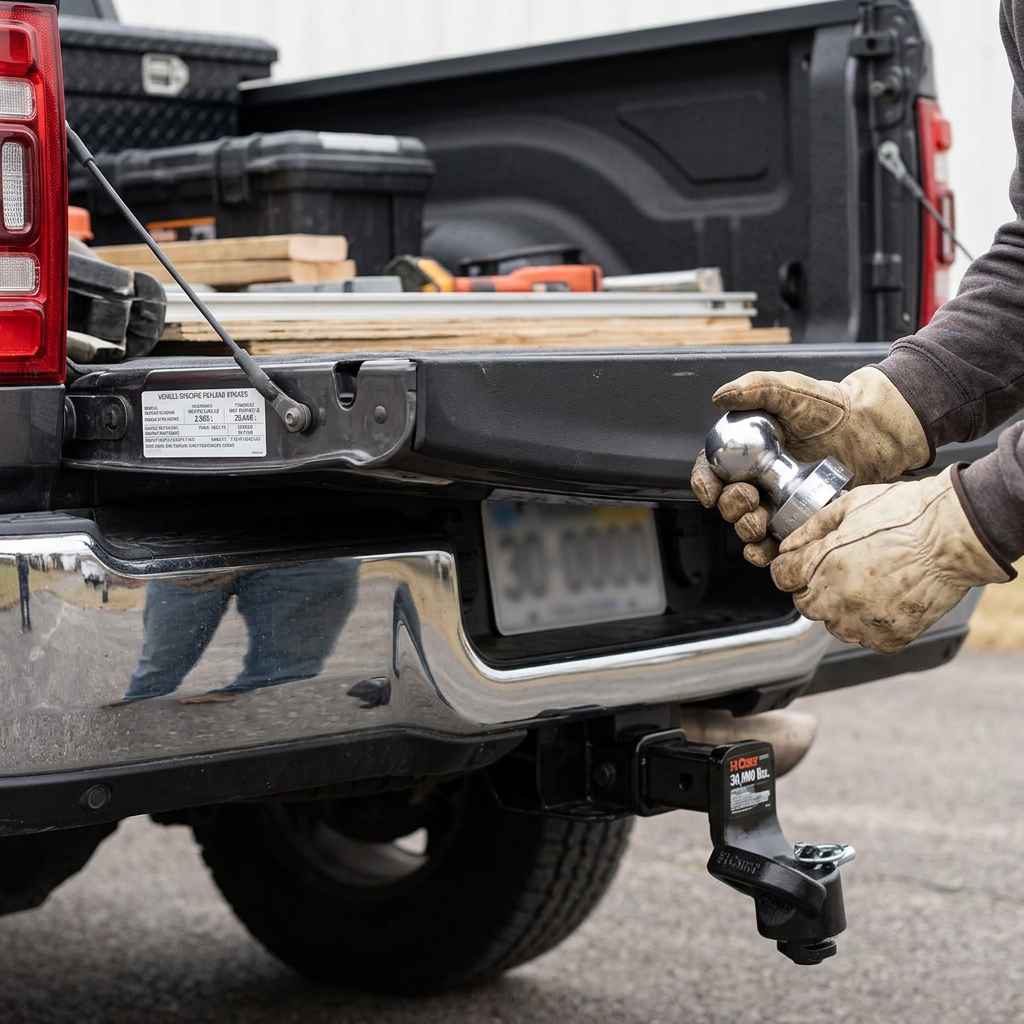
Hitch hardware is worth treating as a system choice, not as a single part. A gooseneck ball or receiver can be rated far above what a specific truck configuration can carry on its rear axle or tires. That mismatch shows up when the hardware looks “overbuilt” on paper but the truck’s payload sticker is already nearly consumed by people, tools, and the hitch load itself.
Factory puck systems add another filter: compatibility matters as much as capacity. For trucks with the correct prep package, an OEM-style gooseneck kit like CURT 60618 is the kind of part that solves fit and retention cleanly, but it still needs verification for model year and bed configuration. Hardware that fits poorly or locks imperfectly can create noise, wear, and unwanted movement that feels like a “truck problem.” It’s often a fit problem.
Safety chain attachment is also a real-world detail, not an accessory. If the puck system needs dedicated anchors, a component like CURT 60617 exists to keep chain geometry correct under articulation and uneven ground. That matters most on steep driveways, rutted campsites, and tight turns where chains can bind if the attachment points are wrong.
Receiver towing creates a different trap: a 2-inch receiver can be appropriate for lighter towing and still be the wrong choice for heavy tongue weight. A fitment-specific receiver such as CURT 13333 belongs in that “right job, right rating” category. It should never be used as a shortcut around tongue-weight limits when the trailer’s loaded balance is already heavy on the hitch.
For a neutral safety reference on trailer loading and the mechanics of sway, the National Association of Trailer Manufacturers maintains plain-language towing safety guidance here: NATM Trailer Safety Resources.
Common questions about people still have about RAM 2500 towing capacity
Is RAM 2500 towing capacity really close to 20,000 lb?
Some configurations can land in the high teens and around that number, but it is not a universal rating. The usable limit often becomes payload, because tongue or pin weight plus passengers and cargo can cap the setup long before the trailer rating does.
Why does the tow rating RAM 2500 number change when the engine changes?
Engine and transmission choices affect cooling, gearing behavior, and the combined weight rating used for trailer limits. But a heavier powertrain can also reduce payload in certain trims, so the “stronger engine” choice can still feel tighter with high pin weight.
Can a setup be within the trailer rating but still be unsafe?
Yes. Rear axle load, tire load limits, and poor trailer balance can create instability even when the published trailer rating is not exceeded. Scale weights and axle weights are the clean way to confirm the combination is actually within limits.
Does a weight-distribution hitch increase how much can be towed?
It can improve how the truck carries and controls a bumper-pull trailer, and it can raise the receiver’s allowed rating in “WD” mode when the receiver label provides that rating. It does not increase GVWR, payload, or axle ratings, so it cannot “create” capacity that the truck doesn’t have.
When to choose the higher end of the range, and when to step back
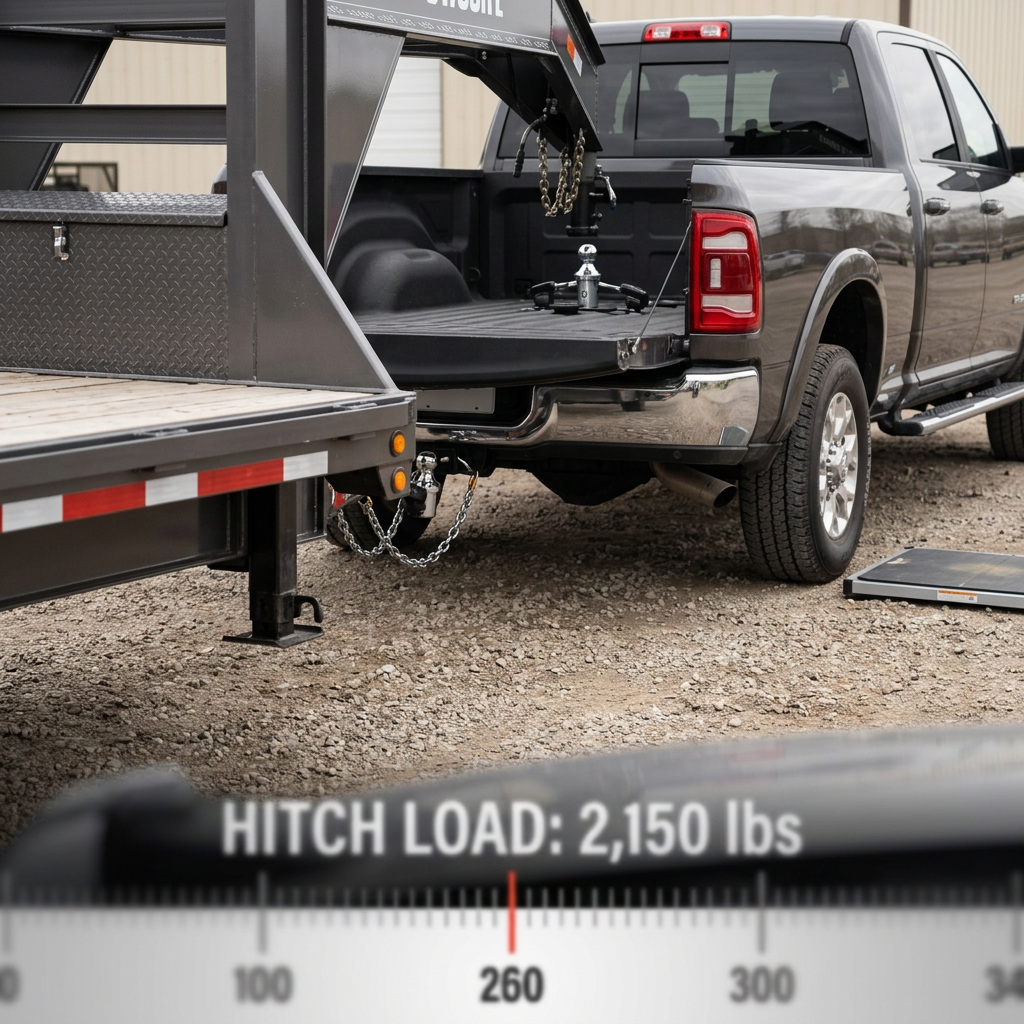
Lean toward the higher end of the RAM 2500 towing capacity range when the trailer’s loaded balance stays predictable, the hitch load leaves real payload headroom, and the combination is used often enough that consistent weighing and setup checks are normal. That context rewards a stable, repeatable system. It also pairs well with gooseneck or fifth-wheel setups that keep the pivot point in the bed and reduce sway sensitivity.
Step back when the trailer’s pin or tongue weight consumes most of the payload before people and cargo are added, or when the trailer’s profile behaves like a sail in wind and passing traffic. If the truck needs suspension aids just to look level and still feels busy on the road, a lighter trailer or a different truck class is the smarter move. Comfort matters, and so does control.