
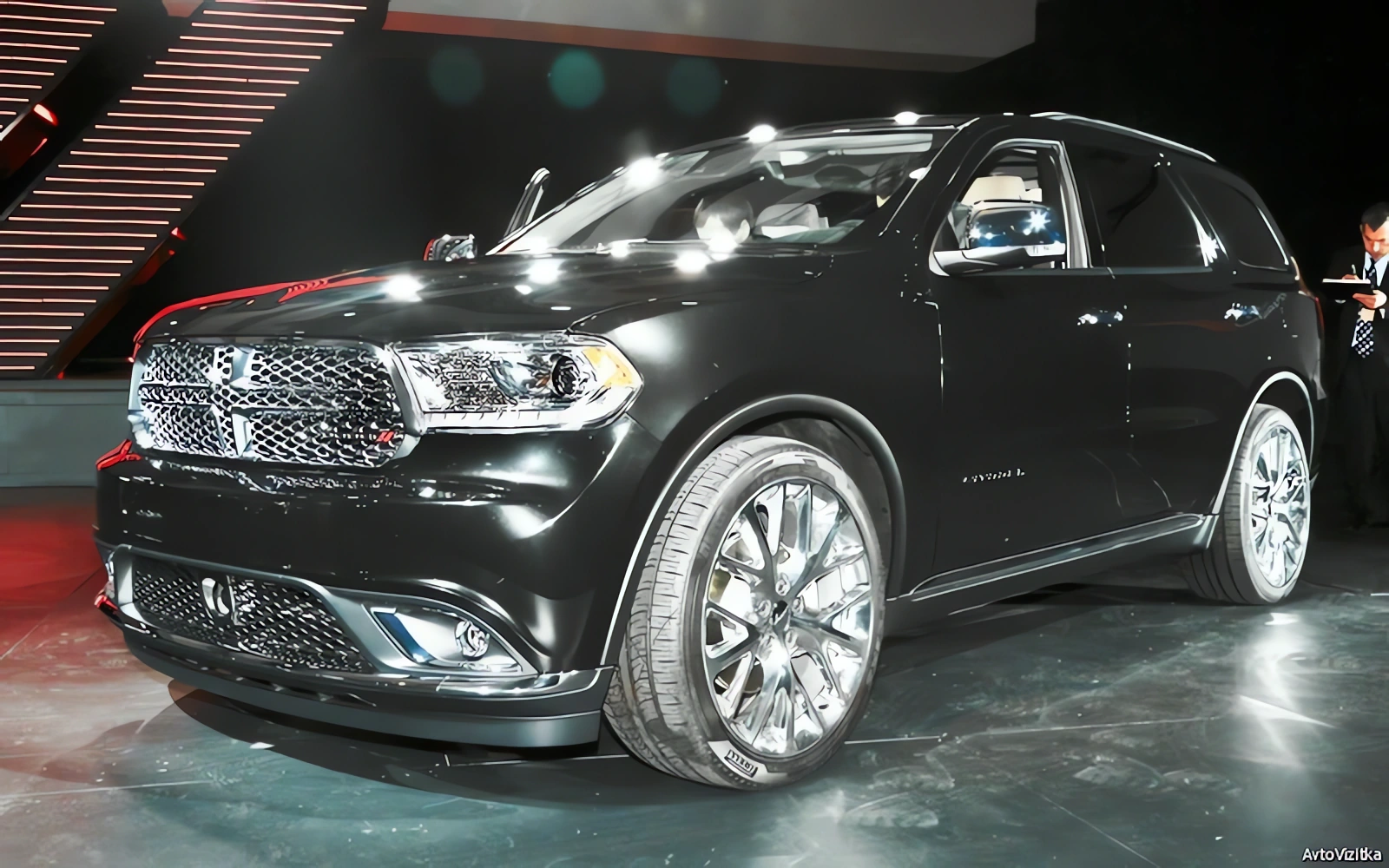
Draft for: https://dodgego.com/the-new-updated-dodge-durango-r-t/
The Dodge Durango R/T has always occupied a very specific and very American corner of the three-row SUV market. It is not trying to be the quietest luxury crossover, and it is not pretending that every family buyer wants the same anonymous turbo-four experience. The Durango R/T is the version for drivers who still care about throttle response, towing confidence, long-distance stability, and the unmistakable feel of a V8 working through a proper automatic transmission. That does not make it a toy. In the right trim and with the right expectations, the R/T is one of the more practical performance-flavored SUVs Dodge has built.
The updated Durango story matters because the R/T name has carried different meanings across the model’s modern life. For many recent model years, the R/T was the familiar 5.7-liter HEMI V8 version, a muscular step above the V6 trims and a more street-friendly alternative to the SRT 392 and Hellcat variants. For the newest Dodge Durango lineup, Dodge’s own current Durango materials highlight HEMI V8 performance across the range and note that R/T 392 models are available with a 6.4-liter HEMI V8 making 475 maximum horsepower. That shift changes the way shoppers should read the badge: an R/T can be the traditional sweet-spot V8 family hauler on the used market, or a much more serious 392-powered machine in the latest configuration.
Either way, the engineering logic is the same. The Durango R/T appeals because it blends old-school torque with a chassis that is calm enough for daily use. The vehicle’s proportions are not delicate, but the long wheelbase and substantial curb weight give it a planted feel on the interstate. The steering is not sports-car sharp, yet it has enough weight and accuracy to make the SUV feel secure rather than vague. Most important, the V8 powertrain gives the driver a reserve of torque that smaller boosted engines often try to simulate but rarely duplicate with the same ease.
What the R/T Badge Means on a Durango
On a Dodge, R/T stands for a performance attitude rather than a single fixed specification. In the Durango, that attitude has usually meant a V8 engine, sportier exterior details, a more assertive exhaust note, and equipment aimed at buyers who want the SUV to feel special every time they climb in. It is still a three-row utility vehicle first. The value of the R/T is that it makes the family-SUV job feel less like a compromise.
The classic 5.7-liter HEMI R/T formula is easy to understand: 360 horsepower, 390 lb-ft of torque in many late-model applications, and an eight-speed automatic that keeps the engine relaxed when cruising but ready to wake up when the driver asks for a pass or a merge. In real traffic, the torque figure is more important than the peak horsepower number. A Durango loaded with passengers, luggage, a roof box, or a light trailer does not feel as strained as many smaller-displacement SUVs because the HEMI makes useful thrust without needing to live at high rpm.
The newer R/T 392 formula turns the heat up. A 6.4-liter HEMI with 475 horsepower changes the Durango from a strong tow-capable family SUV into something closer to a muscle SUV with three rows. It is still heavy, still tall, and still subject to the laws of physics, but the bigger HEMI gives the R/T badge a more direct connection to Dodge’s Charger, Challenger, and SRT performance culture. That is good news for the enthusiast, but it also raises the importance of tires, brakes, insurance costs, fuel budget, and disciplined maintenance.
Driving Character: Why the HEMI Still Works
The Durango R/T’s best trick is not simply speed. It is confidence. The HEMI’s broad torque curve makes the SUV feel responsive at the speeds people actually use every day. Around town, a light press of the accelerator is enough to move the vehicle cleanly without the rubber-band sensation common to some modern crossovers. On a highway ramp, the R/T does not need to wait for a small turbo to spool or for a continuously variable transmission to find a simulated ratio. The eight-speed automatic drops cleanly, the V8 takes a breath, and the Durango goes.
That character also helps when the road gets ugly. A large SUV with a naturally aspirated V8 is easy to meter in snow, rain, gravel, or on a steep driveway because the response is predictable. With all-wheel drive, the Durango R/T feels especially composed in bad weather. That does not mean it becomes a winter rally car. It means the driver receives power in a way that is easy to understand, and that matters when the vehicle is carrying family or gear.
The tradeoff is fuel consumption. No honest Durango R/T review should pretend otherwise. The HEMI is satisfying because it is large, relaxed, and muscular. Those traits require fuel, especially in a three-row body. The EPA and DOE fuel economy listings are the correct place to compare exact model-year and drivetrain combinations, because small changes in year, axle ratio, tire package, and all-wheel drive availability can change ratings. As a practical rule, R/T buyers should plan their budget around V8 SUV fuel economy, not compact-crossover expectations.
Towing and Load Advice
Dodge’s current Durango page emphasizes available best-in-class towing capacity of up to 8,700 pounds on properly equipped models such as GT HEMI V8 models with Tow ‘n Go and SRT Hellcat models. For an R/T shopper, the headline is useful, but the details matter more. Towing capacity is not just engine power. It depends on the exact trim, driveline, cooling package, hitch equipment, brake controller setup, payload, passengers, cargo, tongue weight, and trailer brakes. A Durango can be a very capable tow vehicle, but the owner needs to read the door placard and owner’s manual for the specific vehicle instead of relying on a generic internet number.
For real-world towing, the R/T’s advantage is stability and torque. A naturally aspirated V8 does not feel nervous when pulling a moderate trailer, and the eight-speed automatic helps keep the engine in a useful range. Still, the smartest setup is conservative. Keep tongue weight in the recommended range, balance the trailer correctly, use a quality brake controller where required, check tire pressures cold, and remember that payload is often consumed faster than people expect. Four adults, luggage, a cooler, and a trailer tongue can use a large portion of the available payload before the trailer itself becomes the headline.
If you tow often, maintenance should move from normal-service thinking to severe-service thinking. Transmission fluid condition, differential service, brake fluid age, tire load rating, cooling system health, and alignment all become more important. A Durango R/T that is used for school runs and occasional road trips can live an easy life. A Durango R/T that pulls a boat every weekend in summer heat needs stricter attention.
Interior and Daily Usability
The Durango’s cabin is one reason the model has stayed relevant for so long. It is not the newest architecture in the segment, but it is straightforward, roomy, and easy to live with. The seating position feels truck-like without being clumsy. The second row is adult-friendly, and the available third row is useful for children, occasional adults, or the kind of mixed passenger duty that family SUVs see every week. With the rear rows folded, the Durango becomes a serious cargo hauler, which is the point of owning a big Dodge SUV in the first place.
Technology varies strongly by model year and trim. Later Durango models with the larger Uconnect screens feel more modern, and the interface is generally one of the easier systems in the segment to learn. Used shoppers should test every feature rather than assuming it works: Bluetooth pairing, navigation, rear camera, parking sensors, heated seats, ventilated seats, USB ports, keyless entry, remote start, and driver-assistance functions. A clean test drive is not enough if the family will rely on the vehicle’s electronics every day.
Noise is part of the R/T appeal. The V8 sound is present, especially when the exhaust opens its throat under acceleration. That is fun for enthusiasts and sometimes tiring for passengers who prefer silence. Before buying, drive the exact vehicle on the highway at 65 to 75 mph and listen for tire hum, wind noise, exhaust resonance, and any driveline vibration. Big wheels and performance tires can sharpen the look and handling, but they may add noise and replacement cost.
Safety and Inspection Context
Safety research should be model-year specific. IIHS publishes crashworthiness ratings for many Durango years, and NHTSA provides recall lookup tools. The correct move for any used Durango R/T is to check the VIN before purchase and again after purchase. Recalls are not a reason to reject every vehicle, but an open recall is a negotiation point and a service priority. Also check whether the SUV has been modified. Aftermarket wheels, lowering kits, exhaust changes, non-factory lighting, or towing add-ons can affect reliability, legality, and insurance.
A pre-purchase inspection should focus on the expensive systems first. Look for coolant leaks, oil seepage around the engine, transmission shift quality, transfer case operation on all-wheel-drive models, differential noise, brake rotor condition, suspension bushing wear, front-end clunks, uneven tire wear, and evidence of heavy towing. The HEMI is durable when serviced correctly, but no engine likes neglected oil changes, chronic overheating, or cheap repair work. Ask for maintenance records and compare them with mileage, climate, and use.
| Area | What to Check | Why It Matters |
|---|---|---|
| Powertrain | Cold start, idle quality, shift behavior, fluid leaks, service history | V8 repairs and transmission work can be expensive if neglect is hidden |
| Towing equipment | Factory tow package, hitch rating, wiring, brake controller, cooling package | Real towing capacity depends on equipment, not just engine output |
| Chassis | Brake wear, tire age, alignment, suspension noise, wheel size | A heavy SUV consumes tires and brakes faster when driven hard or towed |
| Safety | VIN recall search, IIHS/NHTSA context, driver-assist function test | Ratings and recalls are year-specific, and electronics should be verified |
| Daily comfort | Third-row access, cargo layout, infotainment, highway noise, seat condition | The R/T must still work as a family SUV after the V8 excitement fades |
Who Should Buy the Durango R/T?
The Durango R/T makes the most sense for a driver who needs real space but does not want a soft, anonymous SUV. It is especially compelling for households that tow occasionally, carry passengers often, and appreciate mechanical character. A minivan will be easier to load. A smaller crossover will use less fuel. A luxury SUV may be quieter. But few rivals combine Dodge attitude, three-row packaging, V8 torque, and useful towing strength in the same way.
The R/T is less ideal for buyers who drive mostly short urban trips, park in tight garages, or want the lowest possible running costs. It is a large vehicle with large-vehicle expenses. Tires, brakes, fuel, insurance, and registration can all be more serious than they are on a four-cylinder crossover. If that reality fits the budget, the R/T feels honest. If it does not, the SUV’s charm can become expensive very quickly.
For used shoppers, the 5.7-liter R/T is the balanced pick. It has enough power to feel special, usually costs less than SRT versions, and remains manageable as a daily driver. For new or near-new shoppers looking at an R/T 392, the calculation is more emotional and more performance-driven. The 392 is the one to buy because you want it, not because a spreadsheet says it is the cheapest way to move seven people.
Practical Ownership Tips
First, buy tires with the correct load rating and a tread pattern that fits your climate. A Durango R/T on worn all-season tires will not feel like a performance SUV; it will feel like a heavy vehicle asking too much of too little rubber. Second, service the brakes before they become a problem. Heavy SUVs generate heat, and towing or mountain driving accelerates brake wear. Third, do not ignore small cooling-system issues. A small coolant smell, minor leak, or temperature fluctuation deserves attention before summer towing season.
Fourth, keep software and recalls current. Uconnect systems, safety modules, and powertrain controls are part of modern ownership. Fifth, use the correct oil specification and service interval for the engine and your use pattern. Finally, resist the temptation to modify first and diagnose later. Exhaust, intake, wheel, and suspension changes can be fun, but a well-maintained stock R/T is usually the best foundation.
FAQ
Is the Dodge Durango R/T a true performance SUV?
Yes, within the limits of a three-row SUV. It is not a sports car, but the V8 powertrain, firmer personality, and available performance-oriented packages give it a stronger enthusiast character than most family crossovers.
Is the 5.7-liter HEMI R/T enough, or should I look for a 392?
The 5.7-liter R/T is enough for most owners and is the better all-around used buy. The 392 is for drivers who want a more serious muscle-SUV experience and accept higher fuel, tire, brake, and insurance costs.
Can a Durango R/T tow a large trailer?
It can be a capable tow vehicle when properly equipped, but you must verify the exact vehicle’s tow rating, payload, hitch rating, tongue weight, trailer brakes, and cooling equipment. Do not rely on a generic trim-level number.
What should I inspect before buying a used Durango R/T?
Check service records, VIN recalls, tire wear, brake condition, transmission shift quality, all-wheel-drive operation, coolant leaks, oil leaks, suspension noise, and evidence of heavy towing. A professional pre-purchase inspection is strongly recommended.
Is fuel economy the biggest downside?
For many owners, yes. The R/T’s V8 personality is the reason to buy it, but that same character brings V8 fuel costs. EPA and DOE listings should be checked for the specific year and drivetrain.
Sources
Recommended next reads
Use these related DodgeGo guides to move from model context to ownership checks, fitment details, and relevant parts research.
- Related ownership guide: Updated Dodge Durango received charged version SRT — additional performance context, model details, and practical ownership takeaways.
- Related ownership guide: Prototype of the charged Dodge Durango SRT is noticed at the parking — additional performance context, model details, and practical ownership takeaways.
- Recommended next read: Dodge Durango 2012 – The Icon For Performance — more model-specific context, practical details, and ownership takeaways.
- Recommended next read: 2015 Dodge Durango has received a stylish design package — more model-specific context, practical details, and ownership takeaways.