
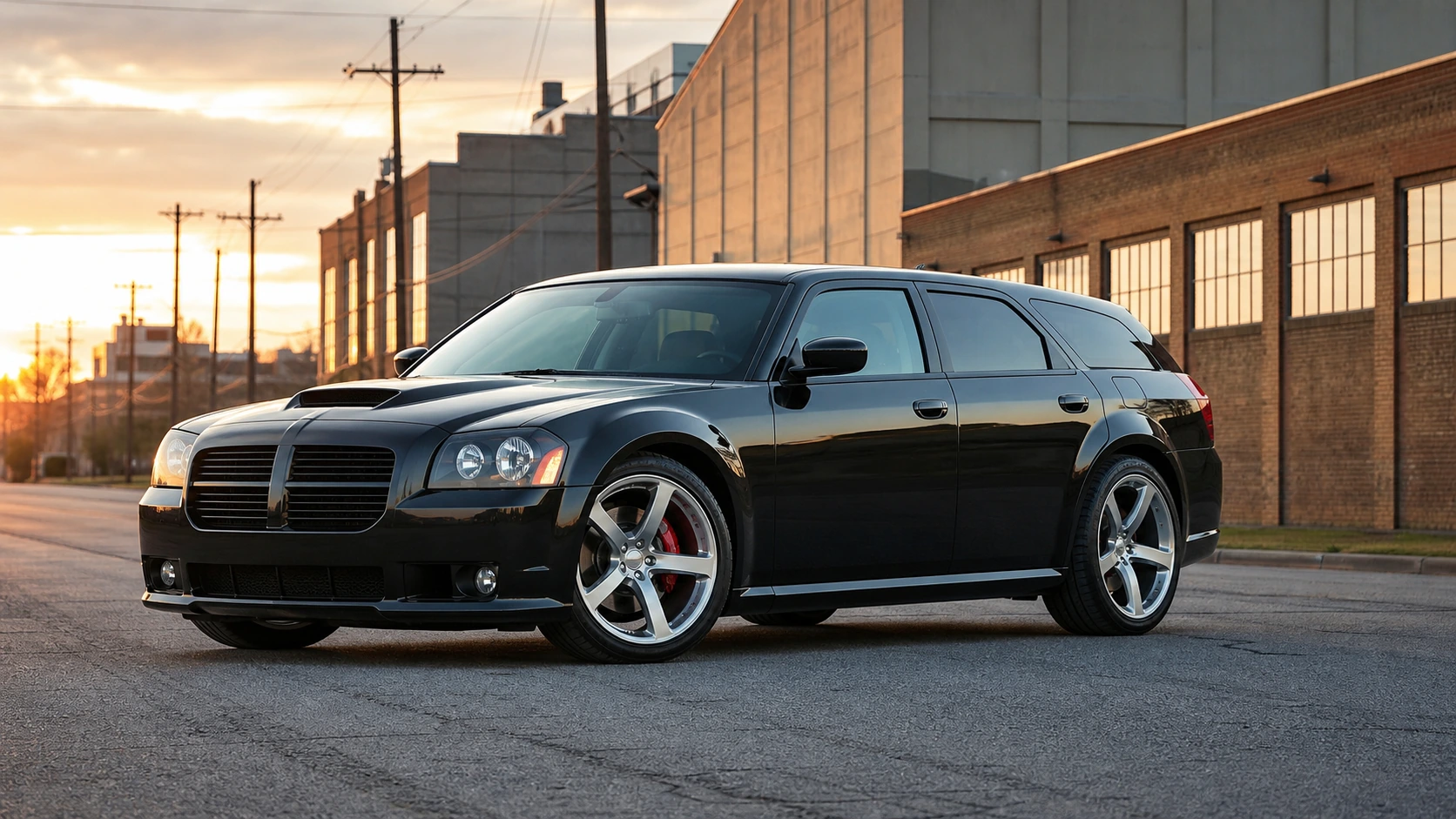
Most people mean the 2005–2008 Dodge Magnum: a full-size LX-platform wagon sold in North America with V6 and HEMI V8 options.
In simple terms, this is Dodge’s modern "muscle wagon" era.
| Scenario | Option | Why it fits |
|---|---|---|
| Primary pick | automatic transmission dipstick tool | Main product for the search intent and the most direct reference. |
| Alternative 1 | JustCar windshield wiper blades | Alternative when texture, feel or function needs to differ. |
| Alternative 2 | Vepagoo front hood struts | Comparison option for tuning routine, finish and tolerance. |
People run into "Dodge Magnum" in two very different ways. Some are chasing a practical long-roof with rear-wheel-drive character. Others are trying to decode listings, trims, or confusing references to older Magnums in other markets. Getting the era right upfront saves time, money, and a lot of wrong parts.
Three things frame the whole topic:
- "Dodge Magnum" is not one single global model across all years and regions.
- The 2005–2008 Dodge Magnum wagon shares a lot with the Chrysler 300 and Dodge Charger, including many mechanical parts.
- Condition and history matter more than the badge now, because every example is an older used vehicle.
What people mean by "Dodge Magnum" today
Most searches for Dodge Magnum point to the 2005–2008 Dodge Magnum station wagon sold in North America. It’s a five-door wagon with the same basic architecture as the Dodge Charger and Chrysler 300 of the same era. That shared platform is a big deal. It affects ride feel, parts availability, and even how easy it is to find a shop that knows the car.
But the name "Magnum" has been used in other places and periods, including coupes and sedans that look nothing like the LX wagon. That’s where confusion starts. A listing might say "Magnum Dodge" and show a wagon. Another might reference a different generation entirely. The safest anchor is the body shape and the model years.
For the North American wagon, the picture is consistent: a long roof, a tall tailgate, and a stance that reads more like a performance sedan than a traditional family hauler. It’s also why the Magnum wagon still has a following. There aren’t many wagons with that mix of V8 sound, usable cargo space, and shared underpinnings with mainstream Chrysler products.
Why the 2005–2008 Dodge Magnum wagon stands out
The 2005–2008 Magnum sits in a narrow slice of the market. It’s bigger than compact wagons and less "soft" than many crossovers of the same era. The LX platform brought a rear-wheel-drive layout for most versions, with all-wheel drive available on some trims and years. That drivetrain layout shapes everything. Steering feel, tire wear patterns, winter behavior, and even which suspension components tend to get replaced first all track back to that architecture.
Engines are a big part of the identity. The range ran from V6 models meant for daily use to V8 versions that made the Magnum feel like a wagon-shaped muscle car. The high-performance SRT variant pushed that idea hardest, but even the more common HEMI-equipped cars are the reason many buyers search "Dodge Magnum cars" in the first place.
It also helps to understand what the Magnum wasn’t. It wasn’t a small, light wagon. It wasn’t built around fuel economy. It was a full-size American wagon with the packaging of a practical car and the attitude of a sedan from the same showroom.
That mix creates two very different owner experiences. A well-kept V6 Magnum can be a straightforward daily driver. A neglected V8 Magnum, especially one that has been modified hard, can turn into a constant project.
Trims and powertrains: the differences that actually matter
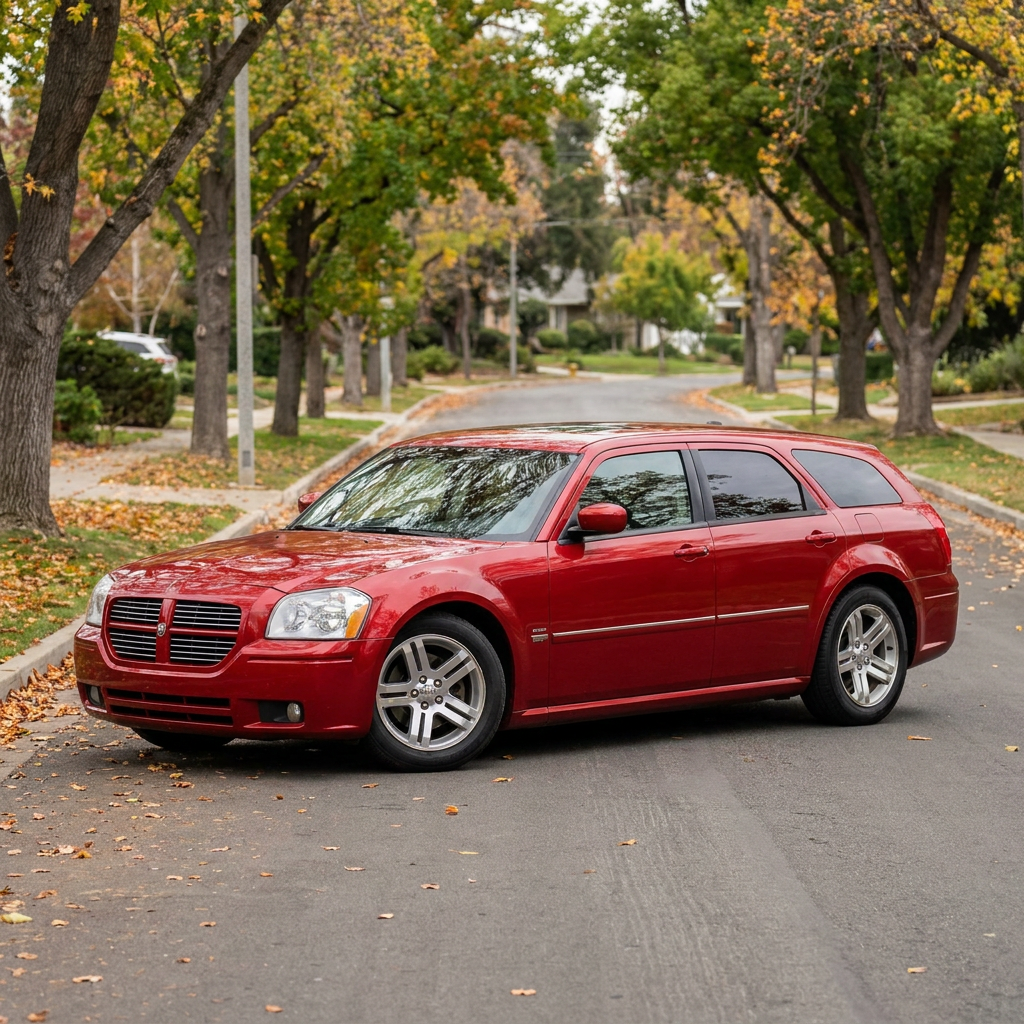
Trim names on the Magnum matter less for cosmetics and more for hardware. The common trims (SE, SXT, R/T, and SRT8) tend to line up with distinct engine and suspension choices. That’s the practical divider. A buyer comparing a Dodge Magnum wagon to another used wagon is rarely deciding based on badges alone.
Start with the core question: V6 or V8. The V6 versions generally make more sense for commuting and basic hauling. They also tend to be less expensive to keep on the road, mainly because brakes, tires, and driveline stress are usually more modest. The V8 versions deliver the sound and shove people associate with the name, but they bring higher fuel use and often higher wear on consumables.
All-wheel drive is another fork. AWD can be a real advantage in snow-belt states, especially for a long, heavy wagon. But AWD adds parts. More joints, more seals, more potential maintenance points. It also changes what "normal" feels like on a test drive, especially if tires are mismatched or worn unevenly.
Two quick checks help keep trim talk grounded:
- Confirm the engine family and displacement on the under-hood label and the VIN decode, not just the listing title.
- Match the drivetrain (RWD or AWD) to the car’s underbody layout, not the seller’s memory.
Those steps sound basic, but older enthusiast cars get mislabeled constantly. And the Magnum attracts enthusiast attention.
Where confusion and bad assumptions show up
The Magnum sits at the intersection of nostalgia and used-car reality. That gap creates predictable mistakes. One is assuming "low miles" automatically means "good." A car can sit for years and still need cooling-system work, tires, and suspension attention. Rubber ages. Fluids degrade. Electrical connectors corrode.
Another common assumption is that parts are rare because the model is discontinued. Many mechanical components are shared with the Chrysler 300 and Dodge Charger of the same platform generation. That helps. But trim-specific and interior pieces can still be annoying to source, and wagon-specific body parts matter more after a rear-end hit.
Modified cars add another layer. The Magnum community has a long history of appearance swaps and performance upgrades. Some are clean and well-documented. Others are a mix of cheap parts and unfinished wiring. A buyer needs to treat modifications as a question mark until proven otherwise with documentation and inspection.
Finally, "New Dodge Magnum" searches often reflect hope for a modern revival or a misunderstanding of what’s on the market. For shopping purposes, the relevant reality is simple. The North American Magnum wagon is a used model now, and the buyer experience is closer to evaluating any older performance-leaning vehicle than browsing something new on a dealer lot.
That’s the foundation. The rest of the decision work is about interpreting condition, history, and configuration without getting distracted by the name.
How a used Dodge Magnum should be evaluated in 2026

A Magnum is old enough now that "model year" explains less than "life history." Mileage matters, but so does how the miles happened. A 150,000-mile highway commuter can feel tighter than an 80,000-mile car that sat outside for years.
Start by sorting the car into one of three ownership realities. Each one changes what needs attention first.
- Continuous daily use: tends to show wear in suspension joints, brakes, and interior touch points. Fluids and routine service are often better documented.
- Long periods of sitting: raises the odds of dry seals, weak batteries, flat-spotted tires, varnished fuel, and sticky brake calipers. Rubber ages even when the car doesn’t move.
- Enthusiast use: can be excellent when the owner keeps records and uses quality parts. It can also hide shortcuts, especially around wiring, emissions equipment, and cooling system choices.
Paperwork is part of the mechanical picture. A clean title is not the same as a clean history. Look for consistent registration, service invoices that match the VIN, and a believable timeline. Gaps aren’t automatic deal-breakers, but they raise the burden of proof.
Rust evaluation deserves its own mindset. On a Magnum wagon, corrosion on subframes, brake lines, fuel lines, and suspension mounting points can turn a "cheap wagon" into a welding project. Surface rust is common; structural rot is the divider.
For buyers who want a fast filter, a realistic baseline is to assume an older LX-platform car will need at least one "catch-up cycle" in the first 30–90 days. That cycle is rarely glamorous. It’s tires, fluids, brakes, and the small items that make the car safe and predictable.
Inspection and test-drive: what changes on a heavy performance wagon
The Magnum’s size and layout create a predictable list of weak signals. Many are easy to miss if the test drive is too gentle or too short.
Begin with how the car behaves cold. A seller who pre-warms the engine may be hiding noisy start-up behavior, slow oil pressure build, or intermittent electrical issues. Cold start also reveals weak batteries and marginal charging systems.
During the drive, pay attention to weight transfer. This is a heavy wagon, and worn components show up as delayed responses rather than dramatic clunks.
- Braking feel: pulsing through the pedal suggests rotor issues, while a long, soft pedal can indicate air in the system or old fluid. A car that pulls under braking is often a caliper or tire issue, not "alignment."
- Steering and front-end tracking: wandering at highway speed often traces back to worn control arm bushings, tie rod ends, or uneven tire wear. It can also signal mismatched tires on AWD cars.
- Acceleration under load: a smooth pull matters more than peak power. Hesitation can be ignition, fuel delivery, or sensor-related, and modified cars add variables.
- Heat management: watch the temperature gauge in stop-and-go driving. Cooling systems that look fine on the highway can struggle at idle.
Then check the "wagon-specific" pieces. Tailgate struts, rear wiper function, water leaks at the hatch area, and rear cargo trim fitment are small details that reveal how the car was treated. A wet spare-tire well often points to long-term sealing issues.
For a quick reality check, match tire condition to the seller’s story. A supposed "carefully maintained" Magnum on bargain tires and uneven wear patterns probably didn’t get careful maintenance where it counts.
AWD, tires, and consumables: where ownership costs show up fast (and why)
The Magnum can be inexpensive to buy and expensive to "normalize." Consumables drive that gap. Tires, brakes, and suspension parts are where the car’s weight and performance lean show up.
AWD adds a specific risk: tire matching. Many AWD systems dislike large differences in rolling circumference. So tire replacement becomes a strategy question, not just a shopping choice. A practical rule is to keep all four tires the same brand, model, and similar tread depth. Uneven wear can also hint at neglected alignment or worn suspension, and AWD makes that neglect louder.
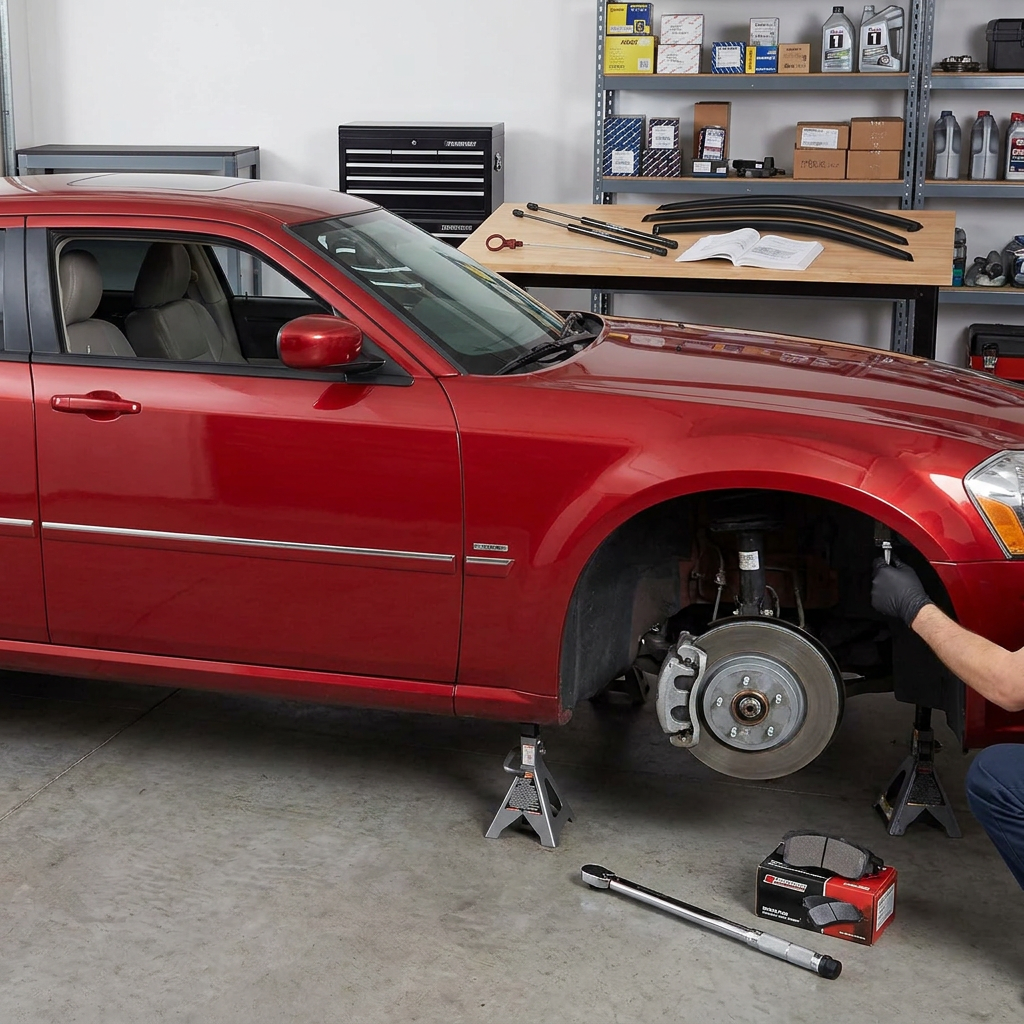
Brakes are another cost multiplier. Larger engines and enthusiastic driving push more heat into rotors and pads. Drilled and slotted rotors can look appealing, but the real question is use case. A daily driver that sees winter salt and short trips may chew through aggressive pad compounds faster and can be noisier. A performance-oriented setup can make sense for repeated hard stops, but it should match how the car is actually driven.
Some ownership items are simple but annoying. Hood lift supports weaken with age and turn routine checks into a safety hazard. On a platform shared with the Chrysler 300 and Dodge Charger, those small parts are easy to find, but it still helps to screen for them during inspection rather than discovering them later.
Fuel economy is part of the cost picture too, but it’s not the only one. A V6 Magnum that needs suspension work and a full set of tires can cost more in the first year than a V8 car that’s already sorted. Condition still wins.
Where a few targeted tools and parts fit (without turning the Magnum into a project)
Part of owning an older Magnum is deciding how hands-on to be. Some owners want a shop to handle everything. Others prefer to verify basics at home and pay for the bigger jobs. Both approaches work, as long as the boundaries are clear.
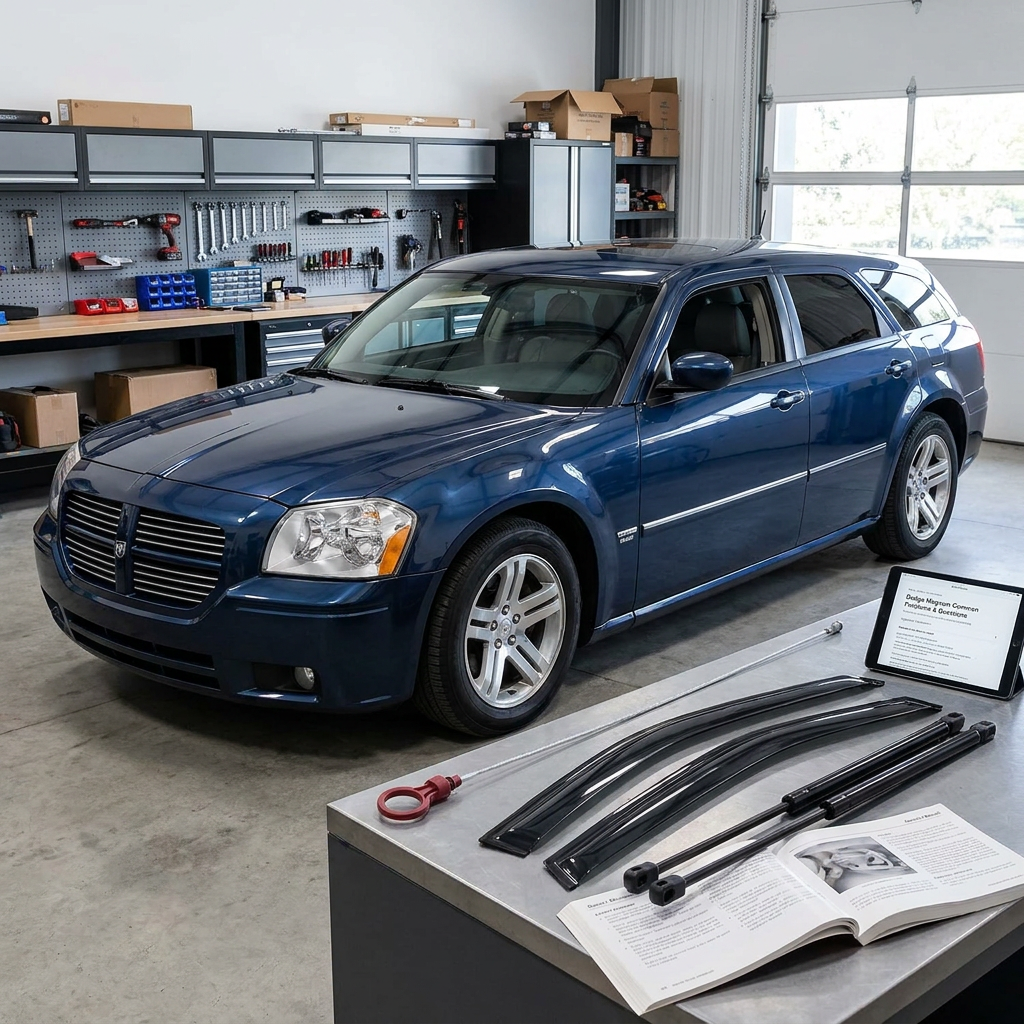
Transmission fluid checking is a good example. Some Chrysler and Dodge automatics from this era were designed without a traditional dipstick, using a service tool instead. That design reduces casual tampering, but it also means fluid level checks should be done correctly and at the right temperature. Anyone considering a do-it-yourself check should follow the factory procedure for the exact transmission code and avoid improvising. For reference, a common option is an automatic transmission dipstick tool sold for Chrysler, Jeep, and Dodge applications, but the critical step is confirming compatibility with the specific transmission in the car.
Small comfort and durability upgrades can also fit a daily-driven wagon, but they should stay secondary to mechanical condition. Window vent visors, wiper blades, and hood struts don’t make a neglected car reliable. They do make a sorted car easier to live with, especially in wet climates or when the car is used year-round.
Modified examples need extra discipline. A Magnum wagon with aftermarket brakes, non-stock wheels, or appearance swaps can be perfectly fine. It can also be a pile of mismatched parts. Documentation is the separator. Receipts, part numbers, and a coherent build plan matter more than the list of modifications.
Finally, keep parts strategy realistic. The Magnum benefits from shared LX-platform components, but wagon-specific exterior and interior pieces can still be slow to source. That difference affects repair timelines after a minor collision or a broken trim piece. It also affects insurance decisions and expectations for "quick fixes."
Shopping for a Dodge Magnum in 2026: how to avoid the two big traps
Two traps catch most buyers of a Magnum. The first is paying for nostalgia. The second is buying someone else’s unfinished plan.
Nostalgia shows up as "rare wagon" pricing on a car that still needs the same unglamorous catch-up work as any other 2005–2008 vehicle. A clean-looking Magnum wagon with shiny paint can still hide tired bushings, old coolant, weak door seals, and a hatch that’s been leaking for years. The wagon body makes some of that harder to spot, because the cargo area can look tidy even when the spare-tire well has been wet.
The unfinished-plan problem is more specific to enthusiast cars. A "Magnum Dodge" listing can be honest and still be incomplete. Wheels that rub, mismatched tire sizes, electrical add-ons spliced into factory wiring, or an emissions setup that won’t pass in stricter states all become the next owner’s job. A buyer who wants a fun daily driver should treat "tasteful mods" as neutral until the paperwork proves the parts and the workmanship.
One practical filter helps: if the seller can’t explain the car’s current baseline in plain language (what was replaced, when, and why), assume the baseline is unknown. That doesn’t mean walking away every time. It means pricing the risk correctly and planning time for a proper inspection.
Safe online buying for Dodge Magnum cars: proof beats promises
Online listings are now the main way people encounter Dodge Magnum cars, and the safest approach is to build a "proof stack" before getting emotionally invested. Photos and a short description are only the first layer. The next layers are records, consistency, and a seller who can answer boring questions without getting defensive.
Start with identity checks that reduce wasted time:
- Confirm the VIN matches the title and the VIN plate. Then run a history report and compare dates and mileage to the seller’s story.
- Ask for a cold-start video that includes the instrument cluster and a walkaround. A seller who refuses simple documentation often refuses other realities too.
- Request close photos of the rear hatch area, spare-tire well, and underbody lift points. Wagons hide water issues and rust in places sedans don’t.
Then use the listing language against itself. If the ad leans hard on "New Dodge Magnum" vibes, "collector," or "rare," push back with practical questions about service intervals, tire age, and what was replaced in the past 12 months. A well-kept car has a recent story. It doesn’t have to be perfect, but it has to be coherent.
When distance is involved, a pre-purchase inspection is the cleanest way to protect the decision. A shop that knows Chrysler LX cars (Chrysler 300 and Dodge Charger included) can often spot the usual wear patterns quickly. The inspection also forces an honest conversation about what’s urgent and what can wait.
For general vehicle-buying guidance and fraud-avoidance basics, see the FTC’s advice on buying a used car.
Where this fits for a Dodge Magnum owner
This fits drivers who want a full-size wagon with real cargo usefulness and the feel of a rear-drive American platform. It also fits buyers comfortable treating the first months as sorting time, not instant perfection. A good match is someone who can fund tires, brakes, and small fixes without resentment and who values the LX-platform parts ecosystem.
This won’t fit anyone seeking modern-car efficiency, quiet, and minimal upkeep. It also clashes with buyers who want "set it and forget it" ownership or who can’t tolerate small electrical quirks, interior aging, or the occasional chase for wagon-specific trim. A heavily modified Magnum wagon is a poor match when the goal is predictable commuting.
Light upgrades that make sense after the baseline is solid
Once a Magnum is mechanically predictable, small upgrades can make it easier to live with. The order matters. Comfort parts are satisfying, but they shouldn’t mask unresolved maintenance. Treat them as finishing touches, not as a rescue plan.
Visibility and weather comfort are easy wins on a daily-driven wagon. If the car is used in rain and road spray, fresh wiper blades matter more than most people admit. A simple example is JustCar windshield wiper blades sized for the 2005–2008 Dodge Magnum. The point isn’t the brand. It’s restoring consistent clearing without chatter or streaking.
Hood lift supports fall into the same category. Weak supports turn routine checks into a safety annoyance, and they discourage basic under-hood inspection. If the hood won’t stay up reliably, replacing the struts is a quality-of-life fix that also supports better maintenance habits. One compatible option is Vepagoo front hood struts for the Chrysler 300, Dodge Charger, and Dodge Magnum fitment range. Match the exact hood configuration before ordering.
Brakes are different. They are safety-critical, and they should match the car’s actual use. Drilled and slotted rotors can be fine, but they can also be noisy or overkill for gentle driving. If the car is driven hard, tows, or sees repeated heat cycles, a complete kit can simplify parts matching. An example is the Detroit Axle brake kit that covers multiple LX-platform years and includes 13.58-inch front and 12.60-inch rear rotor sizing in its description. Fit verification still matters more than the listing headline.
One clear editorial position belongs here: a Magnum that isn’t safe and predictable yet doesn’t deserve cosmetic money. Tires, brakes, steering tightness, and leak control come first. The rest is dessert.
Common questions
Why do people still search "Dodge Magnum" when it’s not a new car?
Many searches are about the 2005–2008 Dodge Magnum wagon and the idea of a "muscle wagon" more than a current showroom product. The name also creates confusion with other Magnums in other markets, so people search to verify what a listing really is.
Is a Dodge Magnum wagon a smart daily driver in 2026?
It can be, if the example is sorted and the buyer budgets for age-related catch-up. It’s a rough choice for anyone expecting modern noise levels, fuel economy, and zero small issues.
Do modified Dodge Magnum cars hold value or create risk?
Documentation decides. Quality parts with receipts and clean workmanship can be fine, but unknown wiring, missing emissions equipment, and mismatched setups often shift cost to the next owner.
What’s the simplest way to reduce scam risk when buying online?
Ask for specific proof early: VIN, title status, cold-start video, and underbody photos. Then use a history report and a pre-purchase inspection to confirm the story matches the car.
When to choose a Dodge Magnum today, and when to pass
Choose a Dodge Magnum when the goal is a distinctive long-roof car with real cargo space, a rear-drive feel, and a platform shared with the Chrysler 300 and Dodge Charger. It makes sense when maintenance budget and patience exist, and when the car’s history is clear enough to price the remaining work.
Pass when the priority is low running cost, modern refinement, or "new-car" simplicity. Passing is also the right call when the seller can’t support claims with records, when modifications are undocumented, or when rust and water intrusion are already part of the car’s daily reality.