
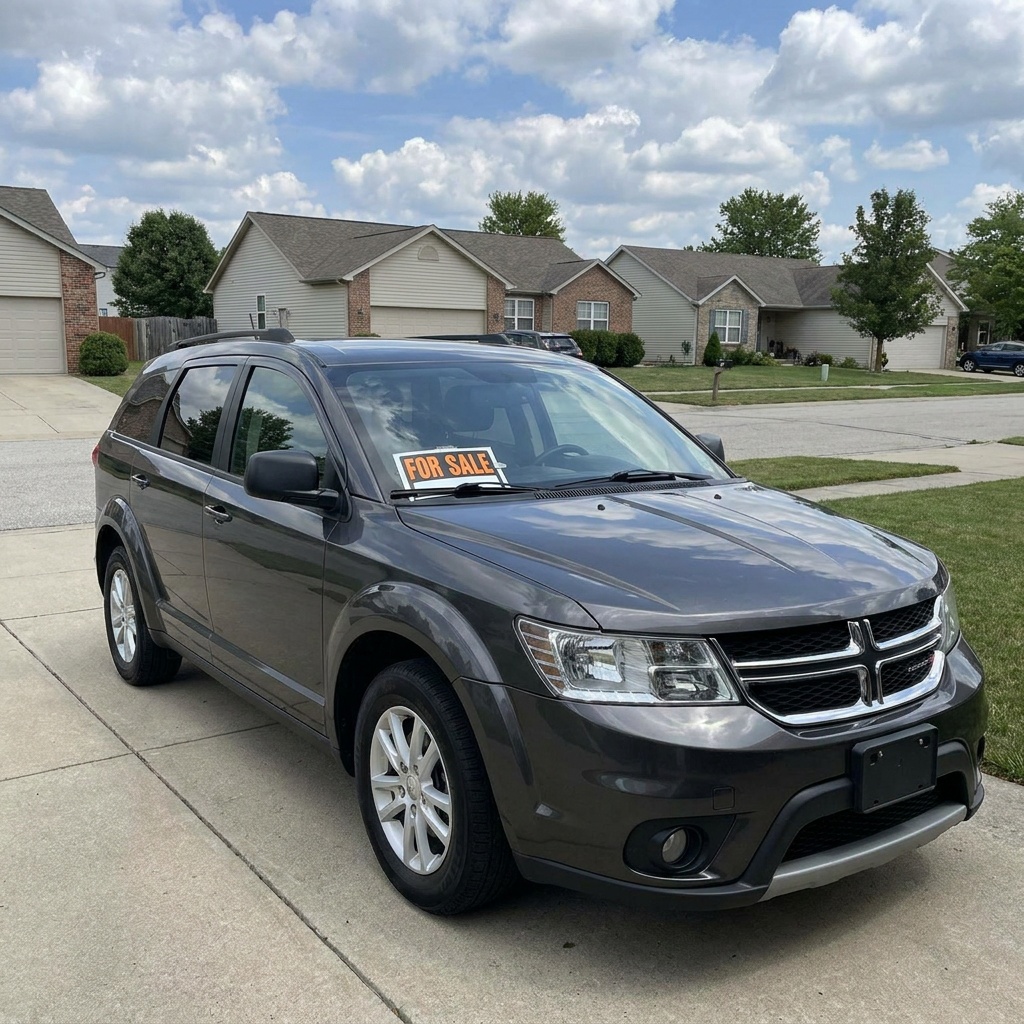
A 2015 Dodge Journey can be a workable low-cost 3-row crossover, but it needs careful trim and condition checks—especially the 4-speed automatic.
In simple terms, this is about judging a specific used vehicle year, not a generic "Dodge SUV."
| Scenario | Option | Why it fits |
|---|---|---|
| Primary pick | 3 Wipers Fits Dodge Journey 2009-2020 Wiper Blades | Main product for the search intent and the most direct reference. |
| Alternative 1 | Carory Cabin Air Filter | Alternative when texture, feel or function needs to differ. |
| Alternative 2 | EcoNour Windshield Sunshade | Comparison option for tuning routine, finish and tolerance. |
Most searches for "2015 Dodge Journey" come from two places. One is a family trying to get seven seats on a tight budget. The other is a shopper comparing listings and trying to avoid the wrong drivetrain, the wrong engine, or a neglected example that will turn cheap purchase price into expensive ownership.
Start with three anchors and the rest of the research gets easier.
- Identify the engine and transmission first. It changes how the vehicle drives and what it costs to live with.
- Confirm seating and cargo expectations in person. The third row is real, but it’s still a compact crossover.
- Buy the condition and history, not the mileage alone. Service records and crash history matter more here.
Is the 2015 Dodge Journey a sensible used buy today?
It can be, but only as a value play. The 2015 Dodge Journey makes the most sense for buyers who want a simple, older-school crossover with available three-row seating and who can accept dated infotainment, modest fuel economy, and performance that depends heavily on the engine and transmission combination.
Shopping gets risky when expectations don’t match the platform. A Journey that’s expected to feel like a newer Honda Pilot or Toyota Highlander will disappoint. And one bought without a pre-purchase inspection can hide wear that shows up right after purchase: brakes, suspension noise, tired cooling parts, or electrical annoyances from age and prior repairs.
One concrete reality helps frame it. Many 2015 Journey trims use a 4-speed automatic, an older design that can feel busy at highway speeds and dull around town. Other versions use a 6-speed automatic that’s easier to live with. Separating those two groups is the first "keep or skip" filter.
Where the 2015 Journey sits in the market
The 2015 Dodge Journey arrived in an era when three-row crossovers were splitting into two camps. One camp moved toward newer powertrains, better crash-avoidance tech, and more efficient packaging. The other camp stayed price-led, leaning on older hardware to keep sticker prices down. The Journey sits closer to that second camp.
That doesn’t automatically make it a poor choice. It does make the evaluation different. The right comparison isn’t "Is it modern?" It’s "Is it straightforward, safe enough for the household, and priced low enough to justify the compromises?"
Buyers also need to separate "space on paper" from day-to-day usability. A 3-row crossover can mean true adult space in the third row, or it can mean occasional seating for kids with limited cargo behind it. The Journey leans toward the second interpretation. That’s fine when it’s understood early.
One more context point: this model year sits before many brands made advanced driver assistance systems common. Features like automatic emergency braking and adaptive cruise control are not a safe assumption in this class and year. Any listing implying otherwise needs verification by VIN equipment and a physical check.
Powertrain choices that change the whole experience
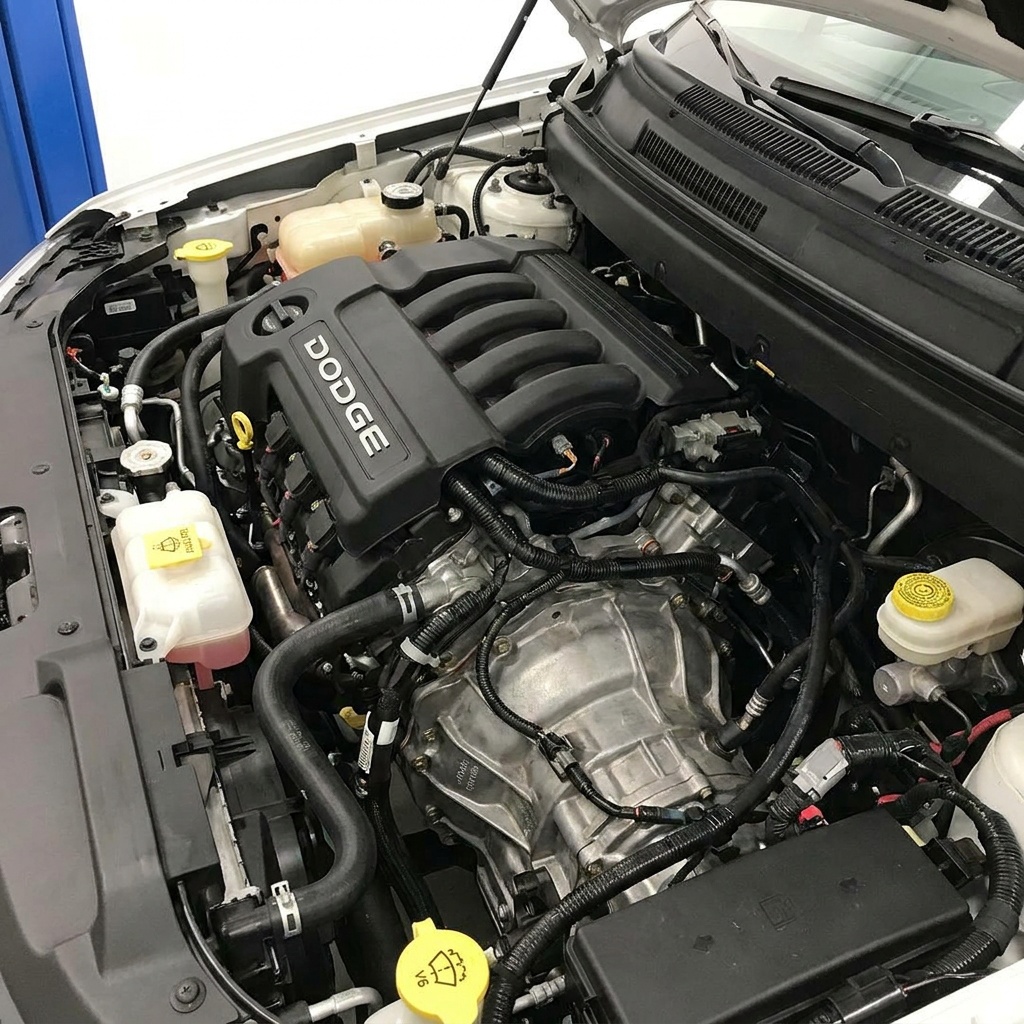
Two choices shape the 2015 Dodge Journey more than any styling detail: engine and transmission. They affect acceleration, highway behavior, and the "busy" feeling some owners describe. They also affect how picky a buyer should be about maintenance history.
The most common entry setup is a 2.4L four-cylinder paired with a 4-speed automatic. On a test drive it often feels adequate at steady speeds but strained when merging, climbing grades, or carrying a full load. The 4-speed’s wider gaps between gears can also mean more noise and higher revs at highway speeds. That behavior is normal for the design. It’s not automatically a defect.
Move up and many trims use a 3.6L V6 with a 6-speed automatic. This pairing changes the vehicle’s personality. Passing and merging are easier, and the transmission has more ratios to keep the engine in a comfortable range. For families who regularly drive with five to seven people onboard, that matters.
Drivetrain is the third piece. Front-wheel drive versions keep things simpler and can be fine with good tyres and realistic expectations. All-wheel drive adds winter traction potential but also adds parts that can wear, leak, or bind if tyres are mismatched. Used AWD vehicles should be checked for equal tyre brand, model, and tread depth across all four corners.
Two quick checks help decode a listing before a visit.
- Ask for a photo of the under-hood emissions label or the VIN-equipped description on the door jamb. It often confirms engine family.
- On the test drive, note highway rpm at 65–70 mph. A 4-speed typically sits higher than a 6-speed in similar conditions.
Interior, seating, and family practicality: what’s realistic
The Journey’s interior packaging is one reason it still shows up in budget family searches. It offers three rows in a footprint that’s easy to park, and it keeps controls simple. Yet the way the space works matters more than the headline seat count.
Second-row comfort tends to be the sweet spot. Adults fit well enough, and child seats are straightforward. The third row is best treated as "kids or short trips." Legroom and the path to the back aren’t generous, and the ride can feel bouncy over broken pavement if the suspension is tired.
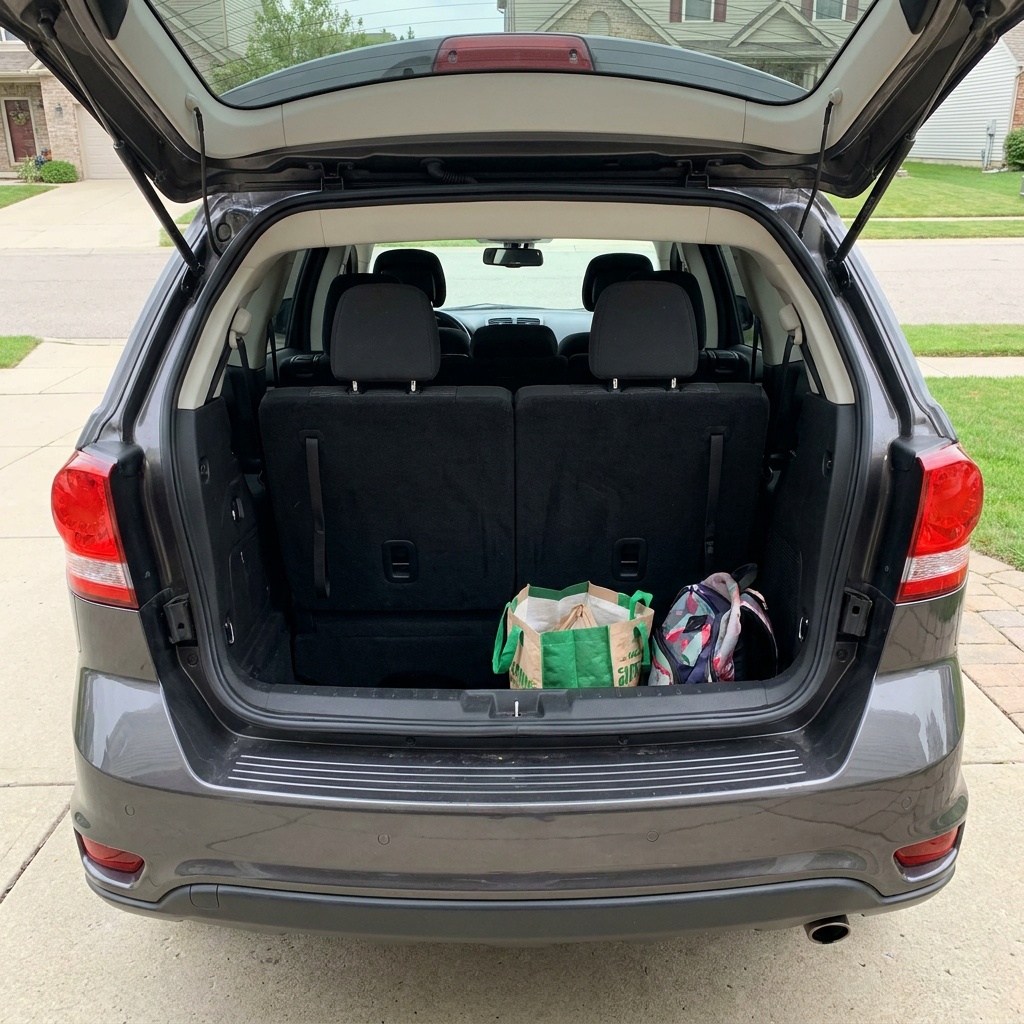
Cargo space is the trade. With the third row up, the area behind it is limited. Grocery runs are fine. Strollers, sports gear, or airport luggage for a full cabin becomes a puzzle. Any buyer planning regular seven-seat use should do a real-world test with their usual items, not a quick glance.
Tech is another expectation-setter. A 2015-era infotainment system can feel slow, and screen resolution and phone integration won’t match newer vehicles. That’s not a reason to walk away by itself. It is a reason to test every function during the visit: Bluetooth pairing, backup camera (if equipped), steering-wheel controls, and all power accessories.
Safety basics still matter. Check tyres, brake feel, and that all seat belts retract smoothly. For recall status, use the NHTSA recall and VIN lookup tool before purchase.
A quick, non-negotiable used-car screening routine
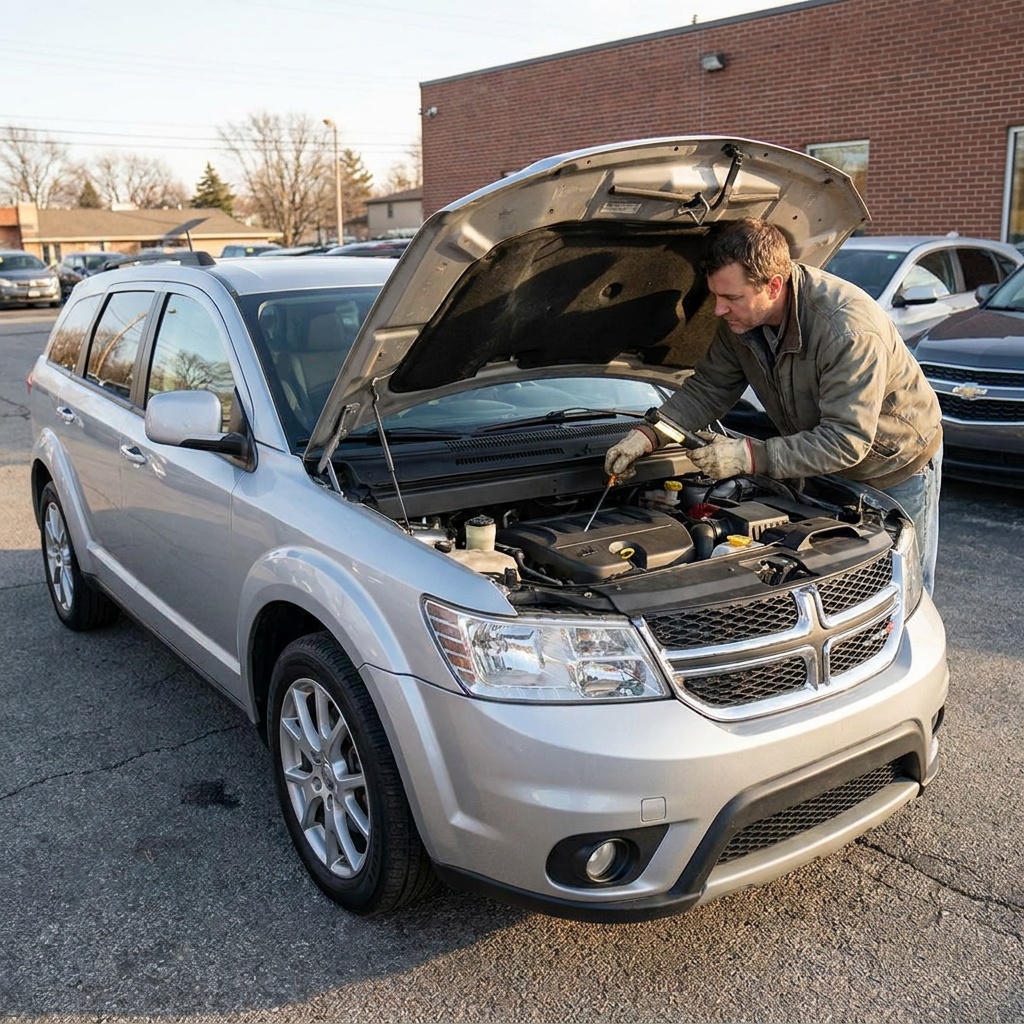
Part of the Journey’s value proposition is price. Price attracts listings with uneven maintenance. A consistent screening routine prevents most expensive surprises.
Start with paperwork. A clean title, consistent registration history, and service records are stronger signals than a low odometer reading alone. A vehicle with 120,000 miles and documented maintenance can be safer than one with 70,000 miles and no proof of care.
Then do a structured walk-around. Look for mismatched paint, uneven panel gaps, and headlamp haze that suggests long sun exposure. Check the windscreen for chips, and inspect tyre wear patterns. Inner-edge wear can point to alignment or suspension issues. Cupping can suggest worn dampers.
On the road, focus on behaviors that show up under load. From 30 to 60 mph, the drivetrain should pull smoothly without shuddering. At steady highway speed, listen for humming that changes with lane position, a common sign of wheel bearing wear on many vehicles. Over bumps, clunks from the front end can hint at worn bushings or links.
Finish with a pre-purchase inspection by an independent shop. One hour of labour is cheaper than guessing. Ask for a scan of stored codes and readiness monitors, a brake and tyre measurement, and a check for fluid leaks under the engine and transmission.
Trim and option decoding for the 2015 Dodge Journey (and why listings get it wrong)
Most used listings for a 2015 Dodge Journey are accurate about the basics (year, mileage, price) and sloppy about the parts that matter. Trim names like SE, SXT, Crossroad, R/T, and Limited can hint at equipment, but they don’t guarantee it. Fleet ordering, mid-year changes, and "looks-like" photos lead to mismatches.
Crossroad is a good example. The 2015 Dodge Journey Crossroad usually signals a more rugged appearance package and a nicer interior mix than base trims, but it still needs verification "on the car." Wheels, roof rails, and badging get swapped after accidents or cosmetic repairs. They’re weak proof.
Better signals are inside and under the vehicle. Look for the transmission behavior on the drive, check for AWD hardware underneath, and confirm the engine family under the bonnet. A quick interior scan also helps: higher trims often bring a larger touchscreen, upgraded audio, and more power features, but retrofits exist.
Some options are easy to miss in a listing and expensive to "add later." Heated seats, remote start, rear climate controls, parking sensors, and a factory tow setup (if present) tend to be worth more than cosmetic trim pieces. If a household needs a specific feature for daily use, treat it as a must-verify item, not a trim assumption.
- VIN-based equipment beats trim badges. Ask the seller for the VIN and cross-check the build equipment with a reputable decoder.
- AWD claims should match the underside. A badge alone isn’t enough if the vehicle has been repaired.
- Third-row expectations vary by configuration. Two-row Journeys exist, and some listings reuse interior photos from other cars.
Searches like "Chrysler Dodge Journey 2015" and "Dodge Journey 2015" often come from shoppers jumping between dealer sites. Keep the same verification routine across every listing. Consistency catches the mistakes.
How to judge a "good deal" on a 2015 Dodge Journey without chasing live market prices
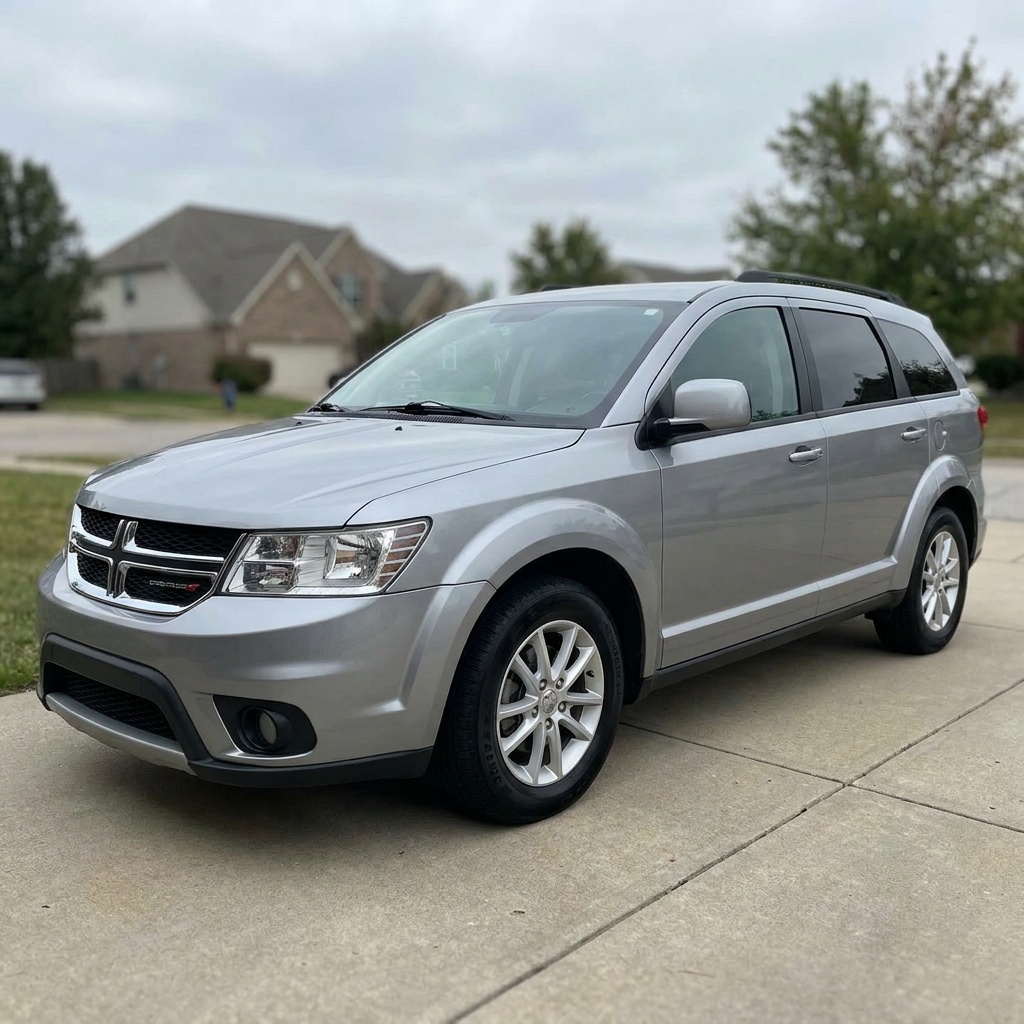
Pricing on a 2015 Dodge Journey swings widely because small configuration differences change day-to-day satisfaction. Buyers tend to overpay for cosmetic freshness and underpay attention to powertrain, tyres, and maintenance evidence. That’s backwards.
Use a simple value framework. First, separate listings into two buckets: four-cylinder with the older 4-speed automatic versus V6 with the 6-speed automatic. That split often explains a big part of the price spread. Then adjust for drivetrain (FWD versus AWD), seating setup (two-row versus three-row), and trim level, but keep those secondary.
Mileage matters, but it isn’t the whole story. A 10-year-old crossover with 90,000 miles and no service proof can be a worse bet than one with 130,000 miles and consistent maintenance records. Condition shows up in tyres, brakes, suspension noise, and interior wear that matches the odometer.
Budget for the "first-90-days" catch-up. Even a well-kept used Journey may need tyres, brakes, fluids, or an alignment soon after purchase. Planning for that avoids the common trap of buying at the top of the budget and then deferring needed work.
One practical numeric anchor helps when comparing listings: tyres should match across all four corners on AWD, and tread depth should be within about 2/32 inch of each other. Larger mismatches can create driveline stress and point to corner-cutting maintenance. It’s a small measurement with real consequences.
Reliability patterns and what to verify over a 30–60 minute test drive
Used-car reliability on a 2015 Dodge Journey is less about one dramatic failure and more about accumulated wear, previous repair quality, and how the vehicle behaves under load. A short test drive can still reveal most of the expensive surprises if it’s structured.
Plan for 30–60 minutes and include three segments: stop-and-go, a steady-speed road, and rougher pavement. Start cold if possible. Many issues hide once everything is warm.
In town, pay attention to shift quality, hesitation, and any flare in engine speed between gears. A rough idle at a stop can be normal on some older vehicles, but a consistent vibration, misfire feel, or warning lights suggest the need for diagnostics before money changes hands.
At steady speed, listen for humming that changes with lane position, then lightly weave within the lane (safely) to see if the noise loads one side more than the other. That pattern often points to wheel bearings. Also watch temperature stability. A gauge that climbs in traffic then drops on the move can indicate cooling system weakness.
On broken pavement, the Journey can expose front-end wear quickly. Clunks over small bumps, steering shake under braking, and a "floaty" rebound after dips can signal worn links, bushings, or dampers. None of those are exotic repairs, but they add up fast on a tight budget.
Finish the drive with a parking-lot check. Turn the wheel fully left and right and creep forward. Binding, hopping, or odd resistance on AWD can hint at tyre mismatch or driveline issues. It’s a simple check that many buyers skip.
Ownership costs that sneak up on budget three-row crossovers
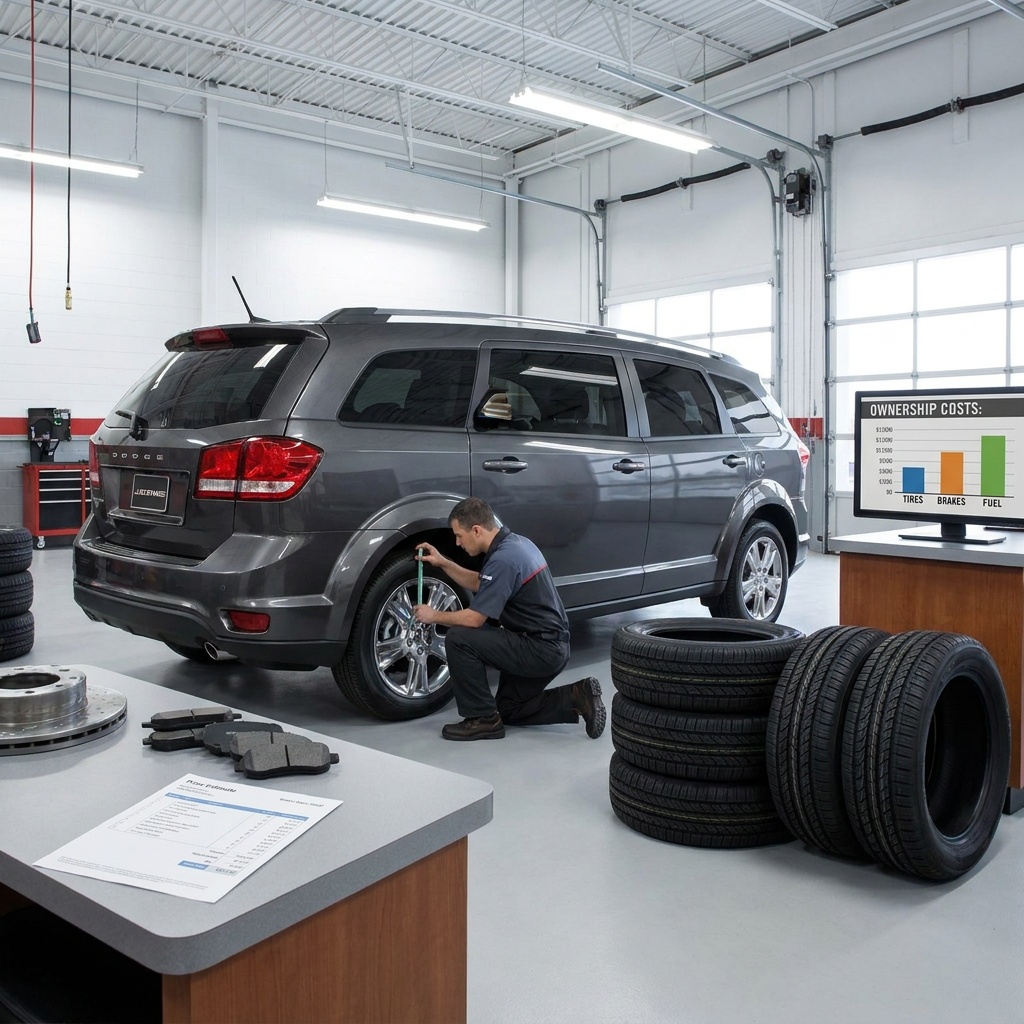
Budget vehicles rarely stay cheap if maintenance is deferred. A 2015 Dodge Journey often attracts price-led shopping, so it’s smart to think in "monthly cost" terms even when paying cash. Fuel, tyres, brakes, and small electrical fixes tend to decide whether the deal feels good six months later.
Fuel economy expectations should be realistic. The four-cylinder can feel strained when loaded, and the V6 trades more power for more fuel use. Either way, short-trip driving and idling (school runs, traffic) usually push consumption higher than a highway commute.
Tyres are a recurring cost that also affects safety and drivability. Cheap mismatched tyres can make the vehicle feel noisy and unsettled, and on AWD they can create mechanical stress. Wheel size also matters. Larger wheels often cost more per tyre, and they can ride harsher on rough roads.
Cabin air quality and visibility are the low-effort wins. A fresh cabin air filter reduces blower strain and improves HVAC performance, and new wiper blades can change wet-weather safety immediately. These aren’t "upgrades." They’re basic resets that help a used vehicle feel cared for.
For shoppers who want to verify fitment parts after the educational checks are done, these are the kinds of maintenance items that match the Journey platform: 3 Wipers Fits Dodge Journey 2009-2020 Wiper Blades and Carory Cabin Air Filter.
How the 2015 Dodge Journey tends to feel in daily life (and why that matters)
A 2015 Dodge Journey rewards buyers who judge it like an older, budget-led crossover. It doesn’t reward buyers who expect a newer driving "finish." That difference shows up in small moments: pulling into fast traffic, rolling over patched roads, or running errands with a full cabin and the air conditioning on.
Most of the satisfaction comes from match, not luck. A lightly loaded commute, predictable routes, and realistic expectations make the Journey’s age easy to live with. A household that routinely asks it to do everything (long highway days, steep grades, seven passengers, heavy stop-and-go) tends to notice the platform’s compromises fast.
One place where the Journey can quietly win is usability. Controls are straightforward, the footprint is easy to place, and the cabin layout suits families who value "simple and familiar." That’s a real benefit in a used vehicle. But the same simplicity also means fewer modern assists and fewer "nice surprises." The test drive needs to include the boring stuff: HVAC performance, wiper sweep, washer spray pattern, and every seat mechanism.
Visibility and climate comfort matter more on older crossovers than many buyers expect. A haze-prone windscreen, worn wiper blades, or a weak blower can make a perfectly decent used vehicle feel tiring at night or in rain. Those are cheap fixes, but only if they’re caught early.
Small fixes that change the first month of ownership more than "upgrades"
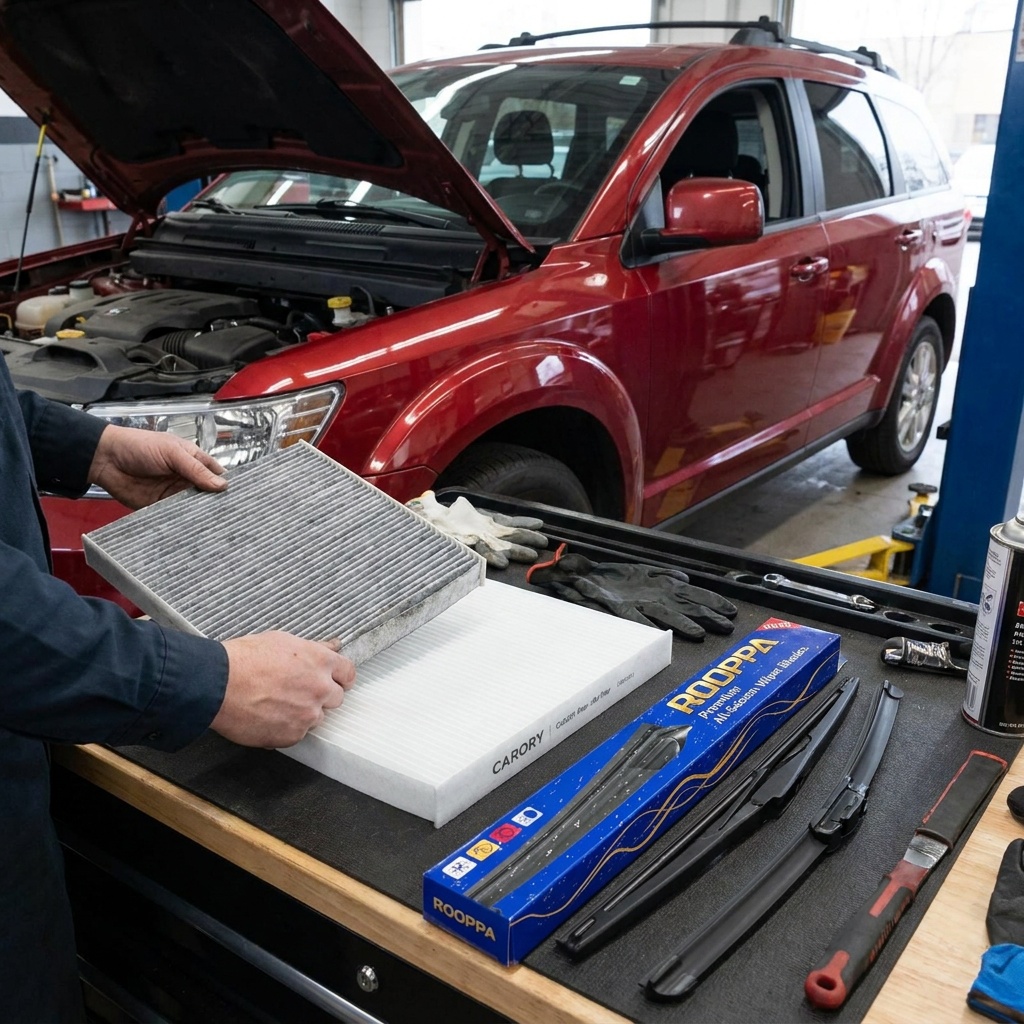
With a used 2015 Dodge Journey, the smartest early spending is rarely cosmetic. It’s the low-cost maintenance that improves safety and reduces annoyance right away. Think of it as resetting the basics so the vehicle can be judged fairly.
Start with visibility. Replace wipers if they chatter, streak, or leave an unwiped strip at the driver’s eye line. The Journey uses a 24-inch driver blade, 19-inch passenger blade, and a 12-inch rear blade on many setups. A pre-packed set can reduce fitment mistakes, as long as the connector type matches the arm on the vehicle. For a reference point, 3 Wipers Fits Dodge Journey 2009-2020 Wiper Blades is one example of a kit that matches those lengths.
Then do cabin air quality. A clogged cabin filter makes the HVAC feel weak and can add windscreen fogging problems in damp weather. It’s also an easy way to spot maintenance habits. If the filter looks ancient, other routine items may have been skipped too. For fitment verification, Carory Cabin Air Filter is a common replacement style listed for Journey-era FCA platforms, but the part number match should still be confirmed to the vehicle.
Heat management is the other "quiet win." A windshield shade won’t fix a weak air conditioner, but it can reduce cabin bake-in on a hot day and make the first minutes of driving less punishing. That matters for school runs and short errands. If that’s a daily scenario, EcoNour Windshield Sunshade is an example of a model-specific shade that’s meant to match the Journey’s screen shape.
Washer performance is worth checking before winter or long highway travel. If the spray is weak or mis-aimed, it can be a nozzle issue, a split hose, or a clogged one-way valve. A small parts kit can be useful when the fix is clearly mechanical and the rest of the system is working. 52 In 1 Windshield Washer Nozzles Kit is the type of assortment that can help when a vehicle has broken clips, brittle hose sections, or missing connectors.
When it fits well, and when it’s the wrong kind of "cheap"
A 2015 Dodge Journey fits buyers who need three rows on a budget, drive mostly around town, and can accept older tech without resentment. It also fits shoppers who can separate "good enough" from "modern" and who are willing to walk away from a neglected example, even if the price looks tempting.
It won’t satisfy drivers who want quiet highway cruising, the feel of a newer transmission, or modern driver-assistance features as a baseline. It’s also a poor match for households that must use the third row for adults and luggage at the same time. In that use case, a cheap purchase price can turn into constant compromise, not just occasional inconvenience.
Common questions
Is a 2015 Dodge Journey okay as a family vehicle if the third row will be used often?
It can work if "often" means kids and short trips, not adults on long drives. The limiting factor is the combination of third-row comfort and the cargo space left behind it.
Do trim names like "2015 Dodge Journey Crossroad" guarantee the features a listing claims?
No. Trim names are a clue, not proof. Only the VIN equipment details and an in-person check can confirm items like drivetrain, seating configuration, and major comfort features.
Does all-wheel drive automatically make a used Journey a better buy?
AWD helps traction in low-grip conditions, but it also adds complexity. If tyre matching and maintenance history aren’t solid, AWD can become a downside instead of a benefit.
What’s the fastest way to tell if a listing for a 2015 Dodge Journey is being careless?
Look for vague claims that can’t be verified in photos, like incorrect drivetrain, missing interior shots, or inconsistent trim badging. A seller who won’t provide the VIN or clear photos of key details is another red flag.
When choosing a 2015 Dodge Journey makes sense, and when it’s smarter to keep shopping
Choosing a 2015 Dodge Journey makes sense when the goal is a low-cost, straightforward used crossover, and the specific vehicle shows clear signs of care. A clean history, consistent maintenance evidence, and a test drive that feels predictable matter more here than a shiny exterior or a named trim package.
Keeping shopping is wiser when the household needs modern safety tech, frequent long-distance comfort, or adult-friendly third-row use. In those scenarios, a different model or a newer year tends to cost more up front but saves daily frustration and reduces the odds of buying into compromises that can’t be fixed later.